‹ Violetta: all episodes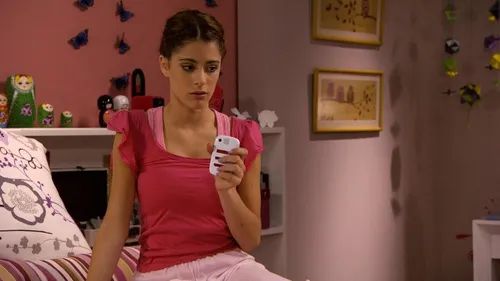
Season 1 · Episode 24
Una oportunidad, una canción
B1ArgentineFast dialogueFast: quicker, harder to follow· 45 min on Disney Plus
 Argentineon Disney Plus
A musically-talented teenager returns to her native Buenos Aires after living in Europe.
29 words and expressions8 free to read and keep
Keep one and it comes back tomorrow, then 3 days, then a week, until you know it.
Worth remembering from this episode
Ordered by what we think matters most.
novio / novia
boyfriend / girlfriend; also fiancé / fiancée depending on contextnoun (m/f)Llevan tres años juntos y ya la presentó a su familia como su novia.They have been together three years and he has already introduced her to his family as his girlfriend.espectáculo
show, performance, spectaclenoun (m)Montaron un espectáculo de danza con más de cien personas en el escenario.They put on a dance show with more than a hundred people on stage.meterse en
to stick your nose in, to interfere in something that is not your businessexpressioncolloquialVery common in everyday speech. The phrase signals irritation that someone is overstepping. Often heard as an accusation: 'no te metas' or 'métete en tu trabajo'.
No te metas en mis asuntos, que ya soy mayorcita para tomar mis propias decisiones.Don't stick your nose in my business, I'm old enough to make my own decisions.muestra
showcase, demonstration, show (in educational or artistic context)noun (f)El conservatorio organiza una muestra al final de cada semestre para que los alumnos actúen.The conservatory organises a showcase at the end of each semester so the students can perform.terminarla
to cut it out, to stop it (an instruction to stop annoying or provocative behaviour)expressioncolloquialShort for 'terminarla de hacer algo'. Equivalent to 'stop it already'. Used in frustrated speech between people who know each other well.
Termínala con esas bromas pesadas que ya no tiene ninguna gracia.Cut it out with those stupid pranks, they're not funny anymore.hacerle caso
to listen to someone, to do what someone says, to pay attention to adviceexpressioncolloquialVery frequent in everyday spoken language. The negative 'no hacerle caso' means to ignore or disregard someone. Distinct from simply 'escuchar' because it implies acting on what is said.
Te lo dije mil veces y nunca me hiciste caso; mira ahora cómo ha quedado todo.I told you a thousand times and you never listened to me; look at the state of things now.componer
to compose, to write (music or lyrics)verbLe llevó varios meses componer la melodía principal del álbum.It took him several months to compose the main melody of the album.institutriz
governess, live-in tutor or caretaker for childrennoun (f)La institutriz se encargaba de la educación y el cuidado de los niños durante la semana.The governess was responsible for the children's education and care during the week.
8 worth keeping from this episode. Free to read and keep.
An account is all it takes to keep them.
What Pro opens
- 13 more words and 8 more expressions here, and every entry in every other pack.
- Examples spoken in the show’s own dialect, not a browser voice.
Get Pro ›$59 $29.50 a year, or $8 $4 a month in USD. Early bird, 50% off for life. Cancel anytime.