‹ The Map of Longing: all episodes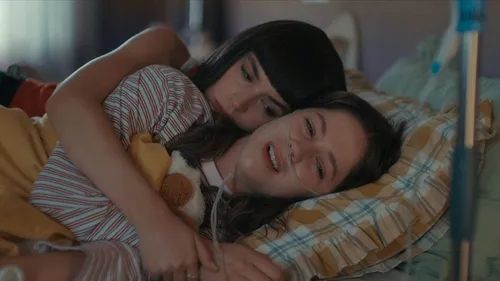
Season 1 · Episode 1
Lucy's Game
C1Castilian on Netflix
 Castilianon Netflix
Mourning Lucy's death, Greta meets the enigmatic Will Tucker, a stranger bearing a game left by her sister — but the only way to play is to trust him.
23 words and expressions10 free to read and keep
Keep one and it comes back tomorrow, then 3 days, then a week, until you know it.
Worth remembering from this episode
Ordered by what we think matters most.
célula madre
stem cellnoun (f)Los investigadores estudian las células madre para tratar enfermedades graves.Researchers study stem cells to treat serious diseases.injerto
graft / transplantnoun (m)El injerto de piel tardó varios meses en integrarse correctamente.The skin graft took several months to integrate properly.rechazar
to rejectverbEl cuerpo puede rechazar un órgano trasplantado si no hay compatibilidad.The body can reject a transplanted organ if there is no compatibility.leucemia
leukaemianoun (f)Le diagnosticaron leucemia cuando era muy pequeño.He was diagnosed with leukaemia when he was very young.duelo
grief / mourningnoun (m)Pasar por el duelo es un proceso largo y personal para cada persona.Going through grief is a long and personal process for each person.a su bola
doing your own thing / in your own worldexpressioncolloquialDescribes someone who acts independently, ignoring others around them. Can be neutral or mildly critical depending on context.
No le cuentes nada a Marcos porque siempre va a su bola y no se entera de nada.Don't tell Marcos anything because he always does his own thing and doesn't pay attention.huésped
host (medical/biological sense)noun (m/f)El organismo huésped puede rechazar el tejido trasplantado.The host organism can reject the transplanted tissue.urna
urn (for ashes)noun (f)Guardaron las cenizas de su padre en una urna de cerámica.They kept his father's ashes in a ceramic urn.
vulgar2 more entries, marked strong language because the episode uses them.Show themHide them
estar hecho una puta mierda
to be in a really terrible state (emotionally or physically)expressionvulgarA very common intensified way of saying you are doing extremely badly. The phrase works as a fixed unit; removing 'puta' softens it significantly but both versions circulate freely.
Después de tres noches sin dormir, estoy hecho una puta mierda.After three nights without sleep, I'm in a really terrible state.me importa una mierda
I couldn't care less / I don't give a damnexpressionvulgarStronger and more dismissive than 'no me importa'. The phrase signals emotional detachment or frustration and is very common in informal speech.
Me importa una mierda lo que piensen los demás de mi forma de vestir.I couldn't care less what other people think about how I dress.
10 worth keeping from this episode. Free to read and keep.
An account is all it takes to keep them.
What Pro opens
- 9 more words and 4 more expressions here, and every entry in every other pack.
- Examples spoken in the show’s own dialect, not a browser voice.
Get Pro ›$59 $29.50 a year, or $8 $4 a month in USD. Early bird, 50% off for life. Cancel anytime.