‹ Bluey: all episodes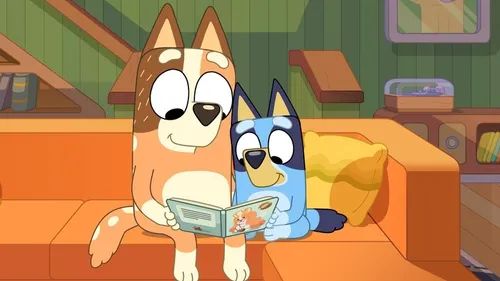
Season 3 · Episode 7
Unicorse
A2LatAm dubRelaxed dialogueRelaxed: slower, easier to follow· 7 min on Disney Plus
on Disney PlusBluey can't get to sleep, so Mum reads her one last story. But they are interrupted by Unicorse, the most annoying hand puppet in the world, whom Bluey tries to reform.
21 words and expressions10 free to read and keep
Keep one and it comes back tomorrow, then 3 days, then a week, until you know it.
Worth remembering from this episode
Ordered by what we think matters most.
dormir
to sleepverbLos bebés necesitan dormir muchas horas al día.Babies need to sleep many hours a day.reina
queennoun (f)La reina abrió el parlamento con un discurso muy emotivo.The queen opened parliament with a very moving speech.cuento
story, talenoun (m)El papá les leyó un cuento a los niños antes de dormir.The dad read the children a story before bed.pincho
thorn, spike, sharp pointnoun (m)Me clavé un pincho en el pie caminando por el jardín descalzo.I got a thorn stuck in my foot walking barefoot through the garden.vamos
come on, let's go (urging someone to move or comply)expressioncolloquialBeyond its literal meaning of 'we go' or 'let's go', 'vamos' is used constantly in Latin American Spanish as a nudge or mild push to get someone moving or to agree, similar to 'come on' in English. It signals impatience or encouragement depending on tone, and its pragmatic range is much wider than the literal words suggest.
Vamos, ya es tarde y el cine empieza en diez minutos.Come on, it's already late and the movie starts in ten minutes.cama
bednoun (f)Tiré la ropa vieja a la basura y compré una cama nueva.I threw the old clothes in the trash and bought a new bed.cuero
leather, hidenoun (m)Esos zapatos están hechos de cuero de alta calidad.Those shoes are made of high-quality leather.aldea
village, hamletnoun (f)Mi abuela nació en una aldea pequeña rodeada de montañas.My grandmother was born in a small village surrounded by mountains.descalzo
barefootadjectiveA los niños les encanta correr descalzos por la playa.Kids love running barefoot on the beach.qué pena
too bad, that's a shame (said without real sympathy, dismissively)expressioncolloquialIn Latin American Spanish, 'pena' most commonly means shame or embarrassment, but 'qué pena' in a dismissive parental tone functions as 'tough luck' or 'too bad for you', not genuine sympathy. The tone carries the meaning as much as the words.
¿Que no quieres comer verduras? Qué pena, pero en esta casa todos comemos lo mismo.You don't want to eat vegetables? Too bad, but in this house we all eat the same thing.
10 worth keeping from this episode. Free to read and keep.
An account is all it takes to keep them.
What Pro opens
- 9 more words and 2 more expressions here, and every entry in every other pack.
- Examples spoken in the show’s own dialect, not a browser voice.
Get Pro ›$59 $29.50 a year, or $8 $4 a month in USD. Early bird, 50% off for life. Cancel anytime.