‹ The Truthers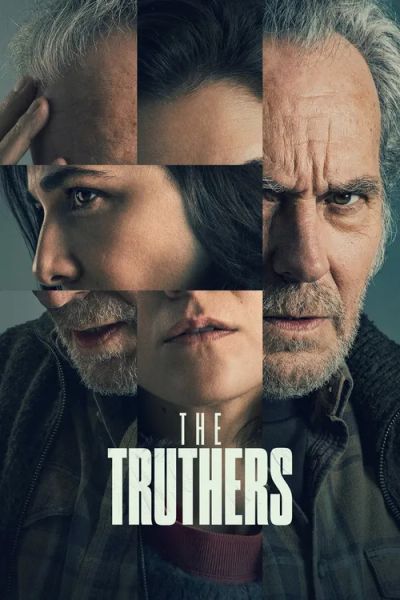
Film · 2026 · Thriller
The Truthers
Los creyentes
C1Castilian106 min on Netflix
 Castilianon Netflix
Ruth, a 30-year-old woman who has been estranged from her family for some time, returns home when her mother dies under strange circumstances. There, she is reunited with her father, Martín, who since retiring seems to have become...
26 words and expressions12 free to read and keep
Keep one and it comes back tomorrow, then 3 days, then a week, until you know it.
Worth remembering from this film
Ordered by what we think matters most.
desván
attic, loftnoun (masculine)Guardamos las maletas viejas en el desván porque no caben en el armario.We keep the old suitcases in the attic because they don't fit in the wardrobe.desaparecer
to disappear, to go missingverbEl perro desapareció durante la tormenta y no lo encontraron hasta el día siguiente.The dog disappeared during the storm and wasn't found until the next day.pestillo
bolt, door latchnoun (masculine)Corrió el pestillo antes de que alguien pudiera entrar.She slid the bolt before anyone could come in.forense
forensic pathologist, forensic (adj.)noun (masculine/feminine), adjectiveEl forense determinó que la causa de la muerte había sido un golpe en la cabeza.The forensic pathologist determined that the cause of death had been a blow to the head.velatorio
wake, funeral vigilnoun (masculine)Pasamos toda la noche en el velatorio acompañando a la familia.We spent the whole night at the wake keeping the family company.informe toxicológico
toxicology reportnoun phrase (masculine)El juez esperó los resultados del informe toxicológico antes de tomar una decisión.The judge waited for the toxicology report results before making a decision.qué va
not at all, no way, far from itexpressioncolloquialUsed to contradict or dismiss something just said, often as a standalone retort. Conveys confident disagreement without being rude.
— Estás cansado, ¿no? — ¡Qué va! Podría seguir corriendo una hora más.— You're tired, aren't you? — Not at all! I could keep running for another hour.montar una película
to let your imagination run away with you, to make something up in your headexpressioncolloquialDescribes convincing yourself of something that probably isn't true, building up an elaborate scenario that exists only in your mind. Often used self-critically or to call out someone else's overthinking.
Lleva días sin llamarme y ya me he montado una película de que está enfadado conmigo.He hasn't called me in days and I've already convinced myself he's angry at me.hacer el paripé
to put on an act, to fake it, to go through the motionsexpressioncolloquialRefers to performing a convincing but insincere show for an audience, either to deceive others or simply to fulfil a social obligation without meaning it.
No le importaba la reunión en absoluto, pero hizo el paripé para no meterse en problemas.He didn't care about the meeting at all, but he put on an act so as not to get into trouble.sorber el seso
to brainwash, to get inside someone's head and control their thinkingexpressioncolloquialSuggests that someone has been so heavily influenced by another person or an ideology that they can no longer think independently. Carries a strong sense of manipulation.
Ese gurú le sorbió el seso y ahora lo vende todo para donar el dinero a su secta.That guru got inside his head and now he's selling everything to donate the money to his cult.mampara
shower screen, glass partitionnoun (feminine)La mampara de la ducha se rompió al caer el bote de champú encima.The shower screen broke when the shampoo bottle fell on it.brida
cable tie, zip tienoun (feminine)Le ataron las manos con una brida de plástico.They tied his hands with a plastic cable tie.
12 worth keeping from this film. Free to read and keep.
An account is all it takes to keep them.
What Pro opens
- 10 more words and 4 more expressions here, and every entry in every other pack.
- Examples spoken in the show’s own dialect, not a browser voice.
Get Pro ›$59 $29.50 a year, or $8 $4 a month in USD. Early bird, 50% off for life. Cancel anytime.