‹ The Simpsons: all episodes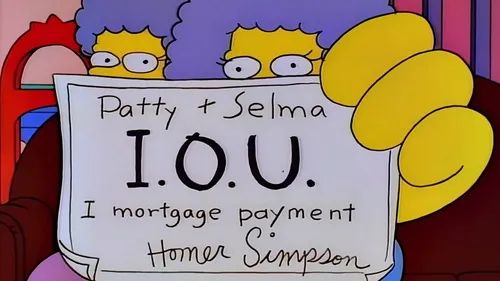
Season 6 · Episode 17
Homer vs. Patty and Selma
B1LatAm dubRelaxed dialogueRelaxed: slower, easier to follow on Disney Plus
on Disney PlusA loan from Patty and Selma makes Homer their slave; Bart is forced to take ballet.
24 words and expressions9 free to read and keep
Keep one and it comes back tomorrow, then 3 days, then a week, until you know it.
Worth remembering from this episode
Ordered by what we think matters most.
hipoteca
mortgagenoun (f)Mis padres tardaron veinte años en pagar la hipoteca de la casa.My parents took twenty years to pay off the mortgage on the house.deuda
debtnoun (f)Acumuló una deuda enorme por no pagar sus tarjetas a tiempo.He accumulated a huge debt by not paying his cards on time.largo
get out, scram (as a command to leave)expressioncolloquialUsed as a sharp dismissal telling someone to leave immediately. The tone is rude or at least very blunt, stronger than a polite 'vete'. Very common across Latin America in heated or informal situations.
¡Largo de aquí antes de que llame a seguridad!Get out of here before I call security!saldar
to settle (a debt), to pay offverbFinalmente pudo saldar todas sus deudas con el banco.She was finally able to pay off all her debts with the bank.prestado
borrowed, on loanadjective/past participleLe pedí prestado el auto a mi vecino para el fin de semana.I borrowed my neighbor's car for the weekend.quebrarse
to go broke, to be financially ruinedverbLa empresa se quebró después de perder su principal cliente.The company went broke after losing its main client.inversión
investmentnoun (f)Hizo una buena inversión comprando terrenos en las afueras.He made a good investment buying land on the outskirts.es el colmo
that's the last straw, that's too muchexpressioncolloquialA fixed expression used to express that a situation has gone beyond what is tolerable. 'Colmo' alone means 'peak' or 'height', but the phrase signals exasperated resignation or anger at the extreme of a bad situation.
Primero se tardó dos horas y ahora quiere que pague yo, ¡es el colmo!First he was two hours late, and now he wants me to pay — that's the last straw!prorroga
extension, deferral (of a payment or deadline)noun (f)Le solicitó una prórroga al banco para pagar la última cuota.She asked the bank for an extension to pay the last installment.
9 worth keeping from this episode. Free to read and keep.
An account is all it takes to keep them.
What Pro opens
- 10 more words and 5 more expressions here, and every entry in every other pack.
- Examples spoken in the show’s own dialect, not a browser voice.
Get Pro ›$59 $29.50 a year, or $8 $4 a month in USD. Early bird, 50% off for life. Cancel anytime.