‹ The Simpsons: all episodes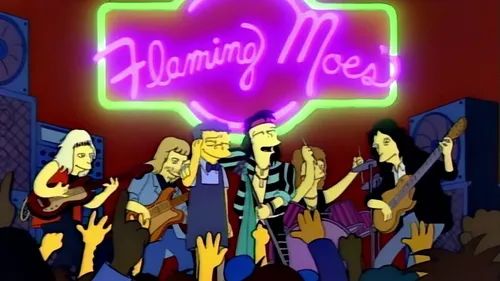
Season 3 · Episode 10
Flaming Moe's
B1LatAm dubRelaxed dialogueRelaxed: slower, easier to follow on Disney Plus
on Disney PlusMoe steals the drink recipe Homer invented, and the rechristened “Flaming Moe” turns his tavern into a hotspot. When a national franchise wants to buy the recipe, Homer wants revenge.
23 words and expressions9 free to read and keep
Keep one and it comes back tomorrow, then 3 days, then a week, until you know it.
Worth remembering from this episode
Ordered by what we think matters most.
trago
drink (alcoholic), sipnoun (m)Después del trabajo, nos tomamos un trago para relajarnos.After work, we had a drink to relax.receta
recipe / prescriptionnoun (f)Guardó la receta de su salsa secreta bajo llave.She kept her secret sauce recipe under lock and key.inventar
to invent, to make upverbMi abuelo inventó un aparato para pelar naranjas más rápido.My grandfather invented a device for peeling oranges faster.cantinero
bartendernoun (m)El cantinero preparó una bebida especial para los clientes habituales.The bartender made a special drink for the regular customers.ingrediente
ingredientnoun (m)El cocinero nunca revela el ingrediente secreto de su receta.The chef never reveals the secret ingredient in his recipe.hechizado
bewitched, under a spelladjective / past participleEn el cuento, el príncipe quedó hechizado por una bruja malvada.In the story, the prince was bewitched by an evil witch.la casa invita
it's on the house, the establishment is payingexpressioncolloquialUsed in bars and restaurants across Latin America to mean the owner or establishment is offering something for free. Literally 'the house invites,' but its meaning as a free offering is non-compositional for learners who don't know this fixed hospitality phrase.
Pidieron el postre y el dueño les dijo que la casa invita.They ordered dessert and the owner told them it was on the house.¡Ay caramba!
expression of surprise, shock, or dismayexpressioncolloquialA general exclamation used across Latin America to express surprise, frustration, or alarm. The meaning shifts with tone: it can be mild or strong depending on context. Not compositionally deducible from its parts.
¡Ay caramba! No me di cuenta de que se me olvidó el pasaporte en casa.Oh no! I didn't realize I forgot my passport at home.pijamada
sleepover, pajama partynoun (f)Mi hija organizó una pijamada con sus amigas del colegio.My daughter organized a sleepover with her school friends.
9 worth keeping from this episode. Free to read and keep.
An account is all it takes to keep them.
What Pro opens
- 11 more words and 3 more expressions here, and every entry in every other pack.
- Examples spoken in the show’s own dialect, not a browser voice.
Get Pro ›$59 $29.50 a year, or $8 $4 a month in USD. Early bird, 50% off for life. Cancel anytime.