‹ The Simpsons: all episodes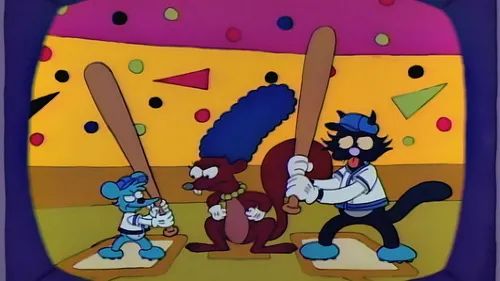
Season 2 · Episode 9
Itchy & Scratchy & Marge
B1LatAm dubRelaxed dialogueRelaxed: slower, easier to follow on Disney Plus
on Disney PlusMaggie attacks Homer with a mallet after seeing it on Itchy & Scratchy. Marge begins a protest outside the production offices, demanding the show be retooled to prevent further violence.
24 words and expressions9 free to read and keep
Keep one and it comes back tomorrow, then 3 days, then a week, until you know it.
Worth remembering from this episode
Ordered by what we think matters most.
violencia
violencenoun (f)Algunos expertos estudian cómo reducir la violencia en los medios de comunicación.Some experts study how to reduce violence in the media.caricatura
cartoon (animated)noun (f)Cuando era niño, me levantaba temprano los sábados para ver caricaturas.When I was a child, I would wake up early on Saturdays to watch cartoons.bueno
well, okay, alright (discourse marker signaling a shift or mild concession)expressioncolloquialWhen used at the start of a turn or sentence, bueno is not an adjective meaning 'good' but a conversational filler that signals the speaker is transitioning, conceding, or wrapping up. Mis-reading it as the adjective is a common trap. Essential for following rapid dialogue.
Bueno, si insistes, podemos intentarlo de otra manera.Well, if you insist, we can try it a different way.programación
programming, broadcast schedulenoun (f)La programación infantil del canal cambiará a partir del próximo mes.The channel's children's programming will change starting next month.chiflado
crazy person, crackpot, nutcaseadjective / nounTodos pensaban que era un chiflado, pero al final su idea funcionó.Everyone thought he was a crackpot, but in the end his idea worked.estatua
statuenoun (m)La estatua en el centro de la plaza fue construida en el siglo pasado.The statue in the center of the plaza was built in the last century.vaya
wow, well (expressing mild surprise, resignation, or irony)expressioncolloquialUsed as a standalone exclamation to react to something unexpected, ironic, or underwhelming. The tone is determined entirely by context; it can express genuine surprise or dry sarcasm. Not the subjunctive form of ir in this use.
Vaya, no esperaba que la reunión terminara tan rápido.Well, I didn't expect the meeting to end so quickly.mazo
mallet, sledgehammernoun (m)El carpintero golpeó la estaca con un mazo para clavarla en la tierra.The carpenter struck the stake with a mallet to drive it into the ground.desnudo
nude, naked; nudityadjective / noun (m)El museo tiene una sala dedicada al desnudo en la pintura renacentista.The museum has a room dedicated to nudity in Renaissance painting.
9 worth keeping from this episode. Free to read and keep.
An account is all it takes to keep them.
What Pro opens
- 11 more words and 4 more expressions here, and every entry in every other pack.
- Examples spoken in the show’s own dialect, not a browser voice.
Get Pro ›$59 $29.50 a year, or $8 $4 a month in USD. Early bird, 50% off for life. Cancel anytime.