‹ One Hundred Years of Solitude: all episodes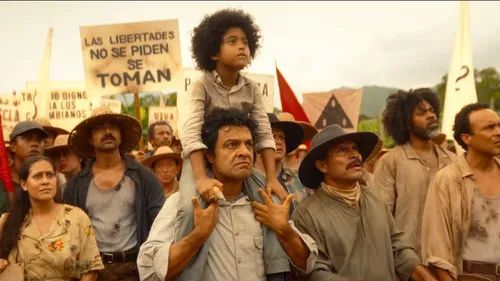
Season 2 · Episode 6
More than Three Thousand of Them
B2Colombian on Netflix
 Colombianon Netflix
Tensions between farmhands and United Fruit Co. break into an all-out massacre that devastates Macondo, its residents and José Arcadio Segundo.
24 words and expressions10 free to read and keep
Keep one and it comes back tomorrow, then 3 days, then a week, until you know it.
Worth remembering from this episode
Ordered by what we think matters most.
huelga
strike (labor action)noun (feminine)Los maestros declararon una huelga de tres días para exigir mejores salarios.The teachers declared a three-day strike to demand better wages.sindicato
labor union, trade unionnoun (masculine)Los empleados del hospital formaron un sindicato para defender sus derechos.The hospital employees formed a union to defend their rights.pliego de peticiones
list of demands, petition documentnoun phrase (masculine)Los mineros presentaron un pliego de peticiones al dueño de la mina.The miners presented a list of demands to the mine owner.vaina
thing, matter, situation, mess (general-purpose noun)expressioncolloquialOne of the most versatile and high-frequency colloquial nouns in Colombian Spanish. It can refer to any object, problem, or situation. Tone ranges from mildly annoyed to completely neutral depending on context. A word that cannot be decoded from its literal meaning ('pod', 'sheath') in everyday speech.
No entiendo esa vaina del sistema nuevo; nadie nos explicó cómo funciona.I don't get that whole new system thing; nobody explained to us how it works.comisariato
company store, commissary (store where workers are required or pressured to spend their wages)noun (masculine)En muchas plantaciones antiguas, los trabajadores solo podían comprar en el comisariato de la empresa.In many old plantations, workers could only buy at the company store.vale
voucher, scrip (token used instead of cash wages)noun (masculine)El patrón pagaba con vales que solo servían para comprar en su propia tienda.The boss paid with vouchers that could only be used to buy in his own store.ley marcial
martial lawnoun phrase (feminine)El gobierno declaró la ley marcial después de los disturbios en la ciudad.The government declared martial law after the unrest in the city.jornalero
day laborer, hired hand paid by the daynoun (masculine)Los jornaleros llegaban al campo antes del amanecer para empezar a cortar caña.The day laborers arrived at the field before dawn to begin cutting cane.
vulgar2 more entries, marked strong language because the episode uses them.Show themHide them
carajo
damn it, hell (expletive expressing strong emotion)expressionvulgarOne of the most common expletives in Latin American Spanish. Functions as a general intensifier of anger, frustration, or defiance. In political or protest speech it marks high emotional stakes. Tone ranges from mildly emphatic to genuinely angry depending on delivery.
¡Ya no aguantamos más esta situación, carajo!We can't take this situation anymore, damn it!hijo de puta
son of a bitch (strong insult expressing anger or contempt)expressionvulgarA high-frequency insult in Latin American Spanish used to express intense anger, contempt, or outrage. In protest and confrontational speech it functions as a collective accusation rather than a personal one. Context determines severity.
Cuando descubrió que lo habían estafado, les gritó hijo de puta a los vendedores.When he found out he had been swindled, he yelled son of a bitch at the sellers.
10 worth keeping from this episode. Free to read and keep.
An account is all it takes to keep them.
What Pro opens
- 9 more words and 5 more expressions here, and every entry in every other pack.
- Examples spoken in the show’s own dialect, not a browser voice.
Get Pro ›$59 $29.50 a year, or $8 $4 a month in USD. Early bird, 50% off for life. Cancel anytime.