‹ One Hundred Years of Solitude: all episodes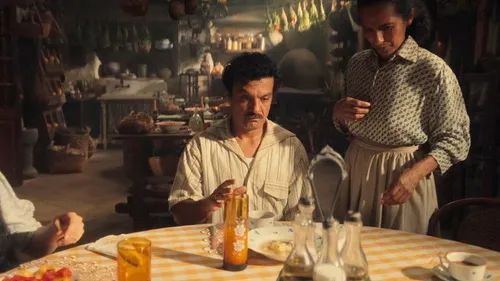
Season 2 · Episode 4
The Innocent Train Had Arrived
B2Colombian on Netflix
 Colombianon Netflix
A new railway connects Macondo to the outside world, but as foreigners settle in, a cruel reality sets in. The Buendías witness a miraculous vanishing.
24 words and expressions10 free to read and keep
Keep one and it comes back tomorrow, then 3 days, then a week, until you know it.
Worth remembering from this episode
Ordered by what we think matters most.
guineo
banana (Latin American term, especially Caribbean/Colombian)noun (m)En el mercado vendían guineos maduros a muy buen precio.At the market they sold ripe bananas at a very good price.forastero
outsider, stranger, foreignernoun (m)Los forasteros que llegaron al pueblo no conocían las costumbres locales.The outsiders who arrived in the town did not know the local customs.compañía bananera
banana company, banana plantation companynoun phrase (f)La compañía bananera empleó a cientos de trabajadores de la región.The banana company employed hundreds of workers from the region.vale
voucher, coupon, token used as paymentnoun (m)El empleado recibió vales para canjear por comida en lugar de dinero en efectivo.The employee received vouchers to exchange for food instead of cash.plantación
plantationnoun (f)Trabajaron desde el amanecer hasta el anochecer en la plantación.They worked from dawn until dusk on the plantation.comisariato
company store, commissary (a store owned by an employer where workers spend their wages or vouchers)noun (m)Los obreros compraban todo en el comisariato porque no había otra tienda cerca.The workers bought everything at the company store because there was no other shop nearby.capataz
foreman, overseernoun (m)El capataz organizaba los turnos y vigilaba el ritmo del trabajo.The foreman organized the shifts and monitored the pace of work.cipayo
puppet, lackey, traitor who serves foreign powersexpressioncolloquialOriginally from the colonial term for Indian soldiers in British service. Used in Latin American political speech as a sharp insult for someone who collaborates with foreign or imperial interests against their own people.
Lo llamaban cipayo porque defendía los intereses de la empresa extranjera sobre los del pueblo.They called him a lackey because he defended the foreign company's interests over the people's.darle la boca callada a alguien
to shut someone up, to prove someone wrong and silence their criticismexpressioncolloquialA Colombian and broader Latin American colloquial phrase meaning to definitively silence critics or naysayers, usually by succeeding where they predicted failure.
Ganó el campeonato y así les dejó la boca callada a todos los que dudaban de él.He won the championship and that shut up everyone who had doubted him.
vulgar1 more entry, marked strong language because the episode uses it.Show itHide it
hijueputa
son of a bitch (very strong expletive)expressionvulgarColombian Spanish contraction of 'hijo de puta'. One of the most common strong expletives in Colombian speech. Can express extreme anger, contempt, or even (in very informal contexts among close friends) surprise or admiration. Here used in angry denunciation.
Cuando se enteró del engaño, explotó: '¡Hijueputa, me robaron todo!'When he found out about the deception, he exploded: 'Son of a bitch, they stole everything from me!'
10 worth keeping from this episode. Free to read and keep.
An account is all it takes to keep them.
What Pro opens
- 10 more words and 4 more expressions here, and every entry in every other pack.
- Examples spoken in the show’s own dialect, not a browser voice.
Get Pro ›$59 $29.50 a year, or $8 $4 a month in USD. Early bird, 50% off for life. Cancel anytime.