‹ One Hundred Years of Solitude: all episodes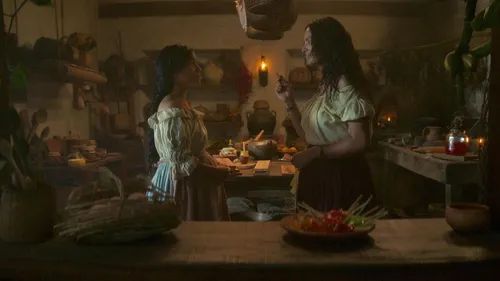
Season 1 · Episode 2
It's Like an Earthquake
B2Colombian on Netflix
 Colombianon Netflix
Aureliano has visions of a war, while José Arcadio Jr. meets a woman. José Arcadio's alchemy obsession pushes Ursula to find a way to support the family.
27 words and expressions10 free to read and keep
Keep one and it comes back tomorrow, then 3 days, then a week, until you know it.
Worth remembering from this episode
Ordered by what we think matters most.
gitano
Romani person; gypsy (also used loosely for travelling merchants)noun/adj (m)Los gitanos llegaban cada año con mercancías y espectáculos que nadie había visto antes.The Romani travellers arrived every year with goods and spectacles no one had seen before.alquimia
alchemynoun (f)Mi abuelo estudió alquimia durante años sin conseguir transformar el plomo en oro.My grandfather studied alchemy for years without managing to transform lead into gold.mijo
my son; term of endearment (from 'mi hijo')expressioncolloquialContraction of 'mi hijo'. Used warmly by parents, grandparents, and older people addressing younger ones, but also between friends and by strangers to signal affection or authority. Does not literally mean 'my son' in all uses.
Mijo, siéntate y come antes de que se enfríe la sopa.Come on, son, sit down and eat before the soup gets cold.laboratorio
laboratorynoun (m)El científico pasaba doce horas al día encerrado en su laboratorio.The scientist spent twelve hours a day locked in his laboratory.aldea
village, hamletnoun (f)La aldea tenía apenas veinte familias cuando llegaron los primeros comerciantes.The village had barely twenty families when the first merchants arrived.madrugada
early morning hours (roughly midnight to dawn)noun (f)El tren parte a las dos de la madrugada, así que hay que salir muy temprano de casa.The train leaves at two in the early morning, so you have to leave home very early.qué barbaridad
good grief; how outrageous; wow (positive or negative)expressioncolloquialAn exclamation of strong reaction, can signal shock, admiration, or disapproval depending entirely on tone. Very common across Colombian registers and age groups.
¡Qué barbaridad! No puedo creer que hayas caminado diez kilómetros con ese calor.Good grief! I can't believe you walked ten kilometres in that heat.qué bárbaro
wow; incredible; that's something elseexpressioncolloquialShares the same root as 'qué barbaridad' but tends to be used more as a compliment or expression of impressed amazement. The distinction is subtle and tonal. Here it carries a clear sense of admiration and plays a structurally important emotional role.
¡Qué bárbaro ese muchacho! Terminó la carrera en tres años.That guy is something else! He finished his degree in three years.ciénaga
swamp, marsh, boggy lagoonnoun (f)Cruzar la ciénaga en invierno es peligroso porque el agua sube mucho.Crossing the swamp in winter is dangerous because the water rises a lot.bastardo
illegitimate child; bastard (historical legal term, not always an insult in context)noun/adj (m)En aquella época, un hijo bastardo tenía pocos derechos legales.In those times, an illegitimate child had few legal rights.
10 worth keeping from this episode. Free to read and keep.
An account is all it takes to keep them.
What Pro opens
- 11 more words and 6 more expressions here, and every entry in every other pack.
- Examples spoken in the show’s own dialect, not a browser voice.
Get Pro ›$59 $29.50 a year, or $8 $4 a month in USD. Early bird, 50% off for life. Cancel anytime.