‹ One Hundred Years of Solitude: all episodes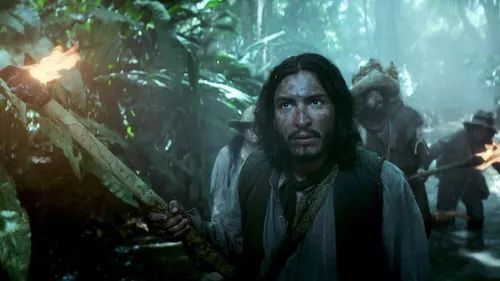
Season 1 · Episode 1
Macondo
B2Colombian on Netflix
 Colombianon Netflix
Fearing a ghost and a curse, Úrsula and José Arcadio leave their town to establish a new home along a few others, braving a journey through tough terrain.
25 words and expressions11 free to read and keep
Keep one and it comes back tomorrow, then 3 days, then a week, until you know it.
Worth remembering from this episode
Ordered by what we think matters most.
compadre
buddy, mate, close friend (also literally: co-parent / godfather relationship)expressioncolloquialExtremely common in Colombian informal speech as a general term of address between men who are close. Technically refers to the relationship between a child's father and godfather, but in everyday use it simply marks warmth and solidarity between male friends.
¿Qué más, compadre? ¿Cómo le fue en el partido?What's up, buddy? How did the match go for you?ciénaga
swamp, bog, marshlandnoun (f)Las ranas croaban sin parar en la ciénaga al borde del camino.The frogs croaked nonstop in the swamp at the edge of the road.travesía
crossing, journey, treknoun (f)La travesía por el desierto duró tres semanas y agotó a todos.The crossing through the desert lasted three weeks and exhausted everyone.ponerse malo
to get ugly, to go south (of a situation), to turn badexpressioncolloquialUsed to describe a situation escalating into danger or conflict. Not about physical illness in this context, it flags that tension has crossed into something serious.
La reunión empezó bien, pero se puso mala cuando sacaron el tema del dinero.The meeting started fine, but it got ugly when they brought up the topic of money.presagio
omen, premonition, forebodingnoun (m)Sintió un presagio oscuro antes de salir de casa esa mañana.She felt a dark premonition before leaving home that morning.aldea
village, hamletnoun (f)La aldea solo tenía unas doce familias y un pequeño mercado.The village had only about twelve families and a small market.antepasados
ancestors, forebearsnoun (m, plural)Sus antepasados llegaron a esta región hace más de doscientos años.His ancestors arrived in this region more than two hundred years ago.pelotón de fusilamiento
firing squadnoun phrase (m)El prisionero fue condenado a enfrentarse al pelotón de fusilamiento al amanecer.The prisoner was condemned to face the firing squad at dawn.absuelto
acquitted, absolvedadjective / past participleEl jurado lo declaró absuelto después de revisar todas las pruebas.The jury declared him acquitted after reviewing all the evidence.
vulgar2 more entries, marked strong language because the episode uses them.Show themHide them
carajo
damn, hell (intensifier or exclamation)expressionvulgarAppears as a free-standing exclamation to add force or frustration. In Colombia its sting is somewhat softened by frequency of use, it can color impatience, effort, or surprise without always being a full insult.
¡Carajo, se me olvidó el paraguas y está lloviendo a cántaros!Damn, I forgot my umbrella and it's pouring!no jodas
no way, you're kidding, come off itexpressionvulgarUsed to express disbelief, challenge, or dismissal. Tone ranges from playful banter to genuine confrontation depending on delivery. Common in informal male speech across Colombia.
¿No jodas! ¿De verdad te comiste toda la torta tú solo?No way! Did you really eat the whole cake by yourself?
11 worth keeping from this episode. Free to read and keep.
An account is all it takes to keep them.
What Pro opens
- 10 more words and 4 more expressions here, and every entry in every other pack.
- Examples spoken in the show’s own dialect, not a browser voice.
Get Pro ›$59 $29.50 a year, or $8 $4 a month in USD. Early bird, 50% off for life. Cancel anytime.