‹ La Reina del Sur: all episodes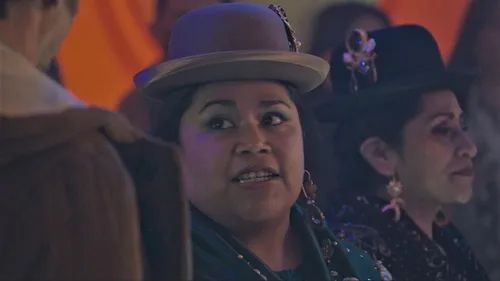
Season 3 · Episode 8
Cholitas in Action
C1Latin American42 min on Netflix
on NetflixAt the cholitas event, Jonathan spots his torturer. Father Gonzo invites Sofía and her family to dinner. Genoveva is secretly reunited with her father.
27 words and expressions11 free to read and keep
Keep one and it comes back tomorrow, then 3 days, then a week, until you know it.
Worth remembering from this episode
Ordered by what we think matters most.
pelado
kid, young guy (informal, slightly rough)expressioncolloquialUsed widely in Colombian and other Latin American Spanish. Literally means 'peeled' or 'bare', but colloquially refers to a young person, often a teenage boy or young man. Not inherently insulting but can carry a condescending or street-level tone depending on context.
Ese pelado tiene talento; con práctica puede llegar lejos.That kid has talent; with practice he can go far.güey
dude, man, idiot (depending on tone)expressioncolloquialAlso spelled 'wey'. One of the most ubiquitous address terms in Mexican Spanish. Between friends it is neutral or affectionate; used with strangers or in an angry tone it can be dismissive or insulting. Learners should read tone carefully.
Oye, güey, ¿me prestas tu cargador? Se me acabó la batería.Hey, dude, can you lend me your charger? My battery died.secuestro
kidnapping, abductionnoun (m)El secuestro del empresario duró tres días antes de que pagaran el rescate.The businessman's kidnapping lasted three days before they paid the ransom.intermediario
intermediary, go-betweennoun (m)Mi abogado actuó como intermediario entre las dos empresas durante la negociación.My lawyer acted as an intermediary between the two companies during the negotiation.matrícula
license platenoun (f)La policía anotó la matrícula del carro que se fue sin pagar.The police noted the license plate of the car that left without paying.bodega
warehouse, storage roomnoun (f)Encontraron cajas de mercancía ilegal en la bodega del edificio.They found boxes of illegal merchandise in the building's warehouse.discreto
discreet, low-keyadjectiveTenemos que ser discretos; no podemos llamar la atención en este vecindario.We have to be discreet; we can't draw attention to ourselves in this neighborhood.licor
liquor, spiritsnoun (m)Decomisaron varios barriles de licor que no tenían documentos legales.They seized several barrels of liquor that had no legal documentation.calcomanía
sticker, decalnoun (f)El camión tenía una calcomanía grande de la empresa en la puerta.The truck had a large company decal on the door.
vulgar2 more entries, marked strong language because the episode uses them.Show themHide them
cabrón
bastard, jerk (strong insult)expressionvulgarVery common in Mexican and broader Latin American Spanish as a general-purpose strong insult or exclamation of frustration. Between close friends it can also be affectionate, but tone and context make the difference. Used frequently in moments of anger or surprise throughout this episode.
¡Ese cabrón me robó el lugar en el estacionamiento sin decir nada!That bastard stole my parking spot without saying a word!chingada
damn (emphatic expletive)expressionvulgarCore Mexican Spanish vulgar intensifier. Appears in expressions of anger, disbelief, or dismissal. Derived from chingar. The phrase 'mandar a la chingada' means to tell someone to get lost or go to hell. Strength varies by context but always marks emotional heat.
¡No manches, se me cayó el teléfono y se rompió la pantalla, qué chingada!No way, I dropped my phone and the screen broke, damn it!
11 worth keeping from this episode. Free to read and keep.
An account is all it takes to keep them.
What Pro opens
- 10 more words and 6 more expressions here, and every entry in every other pack.
- Examples spoken in the show’s own dialect, not a browser voice.
Get Pro ›$59 $29.50 a year, or $8 $4 a month in USD. Early bird, 50% off for life. Cancel anytime.