‹ La Reina del Sur: all episodes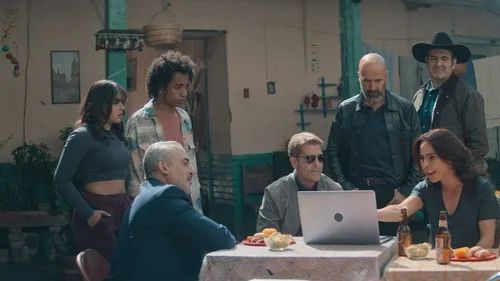
Season 3 · Episode 58
He Is Uriel
C1Latin American42 min on Netflix
on NetflixTeresa realizes who "Uriel" is, and plans to go to Mexico to infiltrate Sen. Kozar's meeting with Epifanio. Genoveva and Susana have a heart-to-heart.
29 words and expressions11 free to read and keep
Keep one and it comes back tomorrow, then 3 days, then a week, until you know it.
Worth remembering from this episode
Ordered by what we think matters most.
alianza
alliance, pactnoun (f)Los dos partidos formaron una alianza para ganar las elecciones.The two parties formed an alliance to win the elections.parcero
buddy, pal, homieexpressioncolloquialTypical Colombian term of address between friends, equivalent to 'cuate' (Mexican) or 'amigo'. Shortened to 'parce' in very informal use. Marks Colombian identity in the speaker's register.
Oye, parcero, ¿me puedes ayudar a cargar esto?Hey buddy, can you help me carry this?informante
informant, molenoun (m/f)La policía protege la identidad de sus informantes.The police protect the identities of their informants.vengar
to avenge, to get revenge forverbJuró vengar la muerte de su hermano.He swore to avenge his brother's death.infiltrarse
to infiltrate, to sneak intoverb (reflexive)El periodista logró infiltrarse en la reunión secreta.The journalist managed to infiltrate the secret meeting.fugarse
to escape, to flee, to break outverb (reflexive)Dos presos lograron fugarse durante la noche.Two prisoners managed to escape during the night.encubrir
to cover up, to conceal, to harbor (a criminal)verbLo arrestaron por encubrir a su cómplice.He was arrested for harboring his accomplice.descifrar
to decipher, to figure out, to decodeverbLes tomó horas descifrar el mensaje en clave.It took them hours to decipher the coded message.
vulgar3 more entries, marked strong language because the episode uses them.Show themHide them
gonorrea
lowlife, scumbag (used as insult toward a person)expressionvulgarIn Colombian slang, 'gonorrea' is repurposed as a strong insult for a despicable person, roughly 'bastard' or 'scumbag'. It is extremely coarse and marks Faustino's Colombian speech throughout the episode. Medically it refers to the STI, so context is essential.
No le hagas caso a ese gonorrea, siempre está mintiendo.Don't pay attention to that scumbag, he's always lying.hijo de la chingada
son of a bitch (extreme insult)expressionvulgarOne of the strongest insults in Mexican Spanish. The verb 'chingar' and its derivatives saturate Mexican colloquial and vulgar speech. Context can shift it from furious insult to exasperated exclamation. Used here to express deep hatred toward an enemy.
Ese hijo de la chingada me robó el carro y desapareció.That son of a bitch stole my car and disappeared.chingármelo
to take him down / to screw him over / to finish him offexpressionvulgarFrom 'chingar', here used with a direct object pronoun to mean decisively defeat, destroy, or kill someone. The meaning shifts widely depending on context, damage, defeat, or kill. Core to understanding Mexican vulgar speech.
Si me buscan problemas, me los voy a chingar a todos.If they come looking for trouble, I'm going to take every one of them down.
11 worth keeping from this episode. Free to read and keep.
An account is all it takes to keep them.
What Pro opens
- 10 more words and 8 more expressions here, and every entry in every other pack.
- Examples spoken in the show’s own dialect, not a browser voice.
Get Pro ›$59 $29.50 a year, or $8 $4 a month in USD. Early bird, 50% off for life. Cancel anytime.