‹ La Reina del Sur: all episodes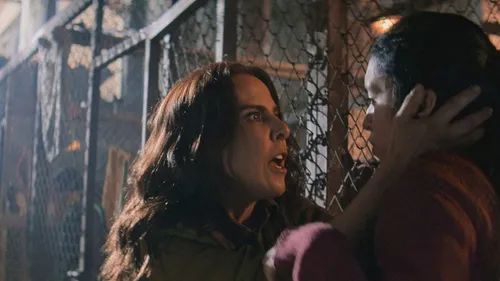
Season 3 · Episode 26
We Came for You
C1Latin American42 min on Netflix
on NetflixWhile Fedor monitors the security cameras, Teresa and the crew infiltrate the factory to try to rescue the trafficked women and capture the Black Rider.
29 words and expressions11 free to read and keep
Keep one and it comes back tomorrow, then 3 days, then a week, until you know it.
Worth remembering from this episode
Ordered by what we think matters most.
órale
let's go / okay / come on / hurry upexpressioncolloquialVery high-frequency Mexican slang with a wide range of meanings depending on tone and context: agreement, encouragement, urgency, or acknowledgment. One of the most flexible expressions in Mexican colloquial speech.
Órale, ya se nos hace tarde, nos tenemos que ir ahorita.Come on, it's getting late, we have to leave right now.mercancía
merchandise, goods, cargonoun (f)El camión llevaba mercancía ilegal escondida entre los muebles.The truck was carrying illegal merchandise hidden among the furniture.muelle
loading dock, pier, wharfnoun (m)El camión se estacionó junto al muelle para descargar la mercancía.The truck parked next to the loading dock to unload the cargo.jale
job, work, gigexpressioncolloquialCommon in Mexican and Mexican-American slang for work or a task at hand. Can also refer to a specific job or assignment. Used in working-class and street registers.
Consiguió un jale de mesero en el restaurante del centro.He got a waiter gig at the downtown restaurant.bodega
warehouse, storage roomnoun (f)Guardaron todas las cajas en la bodega del edificio.They stored all the boxes in the building's warehouse.placas
license platesnoun (f, plural)La policía anotó las placas del vehículo sospechoso.The police wrote down the license plates of the suspicious vehicle.rehén
hostagenoun (m)Los negociadores intentaron liberar al rehén sin usar la fuerza.The negotiators tried to free the hostage without using force.celda
cell (prison or holding room)noun (f)Los presos pasaban veinte horas al día encerrados en su celda.The prisoners spent twenty hours a day locked in their cell.coordenadas
coordinates (geographic)noun (f, plural)Anotó las coordenadas del lugar en su teléfono para no perderse.She wrote down the coordinates of the location on her phone so she wouldn't get lost.
vulgar2 more entries, marked strong language because the episode uses them.Show themHide them
cabrón
bastard / jerk (used as an insult or strong address)expressionvulgarOne of the most common vulgar insults in Mexican Spanish. Can express anger, contempt, or in some contexts even rough affection between close friends. Tone determines meaning completely.
Ese cabrón me robó la cartera y salió corriendo.That bastard stole my wallet and took off running.en chinga
fast, in a hurry, right nowexpressionvulgarMexican vulgar slang meaning to do something at top speed or urgency. Extremely common in informal and heated speech. Derived from a vulgar root word but used without its literal meaning in this context.
Sube en chinga porque el camión ya se está yendo.Get on fast because the bus is already leaving.
11 worth keeping from this episode. Free to read and keep.
An account is all it takes to keep them.
What Pro opens
- 10 more words and 8 more expressions here, and every entry in every other pack.
- Examples spoken in the show’s own dialect, not a browser voice.
Get Pro ›$59 $29.50 a year, or $8 $4 a month in USD. Early bird, 50% off for life. Cancel anytime.