‹ La Reina del Sur: all episodes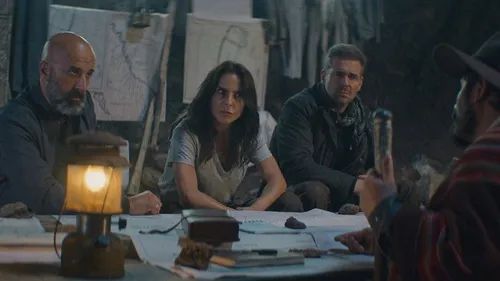
Season 3 · Episode 12
The Negotiation
C1Latin American42 min on Netflix
on NetflixTo save her own skin, Teresa blurts out a name to Abel. Oleg races to find enough money to save his son. Palermo tells Father Gonzo about Sofía's mother.
30 words and expressions11 free to read and keep
Keep one and it comes back tomorrow, then 3 days, then a week, until you know it.
Worth remembering from this episode
Ordered by what we think matters most.
estaño
tin (the metal)noun (m)Bolivia es uno de los países con más reservas de estaño en el mundo.Bolivia is one of the countries with the largest tin reserves in the world.carga
load / shipment (unit of measure for mineral)noun (f)El camión llegó con tres cargas de mineral esta mañana.The truck arrived with three loads of mineral this morning.lana
money / cashexpressioncolloquialVery common in Mexican and U.S. border Spanish. Informal but not rude; used freely among friends and family.
No traigo lana, ¿me prestas para el café?I don't have any cash on me, can you lend me some for coffee?compa
buddy / pal / partnerexpressioncolloquialShort for compañero. Common in Mexican and U.S. Latino speech. Signals solidarity and informal familiarity. Also used in business calls to keep a friendly tone.
Oye, compa, ¿me ayudas a cargar estas cajas?Hey buddy, can you help me carry these boxes?anticipo
advance payment / down paymentnoun (m)El cliente dejó un anticipo del veinte por ciento antes de firmar el contrato.The client left a twenty percent advance payment before signing the contract.rescatiri
middleman / broker (in Bolivian mining trade, one who buys and resells mineral)noun (m)El rescatiri recorría los cerros comprando mineral a los mineros independientes.The rescatiri traveled the hills buying mineral from independent miners.deuda
debtnoun (f)Tardó cinco años en pagar todas sus deudas.It took him five years to pay off all his debts.rastreador
tracker / tracking devicenoun (m)Le pusieron un rastreador al vehículo para monitorear su ruta.They put a tracker on the vehicle to monitor its route.aflojar la lengua
to spill the beans / to talk / to give up informationexpressioncolloquialWidely understood across Latin American Spanish. Often used in tense or confrontational situations to warn someone against talking too much to the wrong people.
No le cuentes nada a ese tipo, tiene fama de aflojar la lengua con cualquiera.Don't tell that guy anything, he's known for spilling the beans to anyone.guarura
bodyguardnoun (m/f)El cantante llegó al evento rodeado de sus guaruras.The singer arrived at the event surrounded by his bodyguards.
vulgar1 more entry, marked strong language because the episode uses it.Show itHide it
cabrón
bastard / jerk (also used as friendly exclamation between close friends)expressionvulgarHighly context-dependent. Between close friends it can be affectionate and surprised, similar to 'man!' or 'dude!'. In confrontational contexts it is a genuine insult. Tone and facial expression are everything.
¡Cabrón, no me habías dicho que ibas a venir a la fiesta!Damn, man, you hadn't told me you were coming to the party!
11 worth keeping from this episode. Free to read and keep.
An account is all it takes to keep them.
What Pro opens
- 11 more words and 8 more expressions here, and every entry in every other pack.
- Examples spoken in the show’s own dialect, not a browser voice.
Get Pro ›$59 $29.50 a year, or $8 $4 a month in USD. Early bird, 50% off for life. Cancel anytime.