‹ I'm Not Afraid: all episodes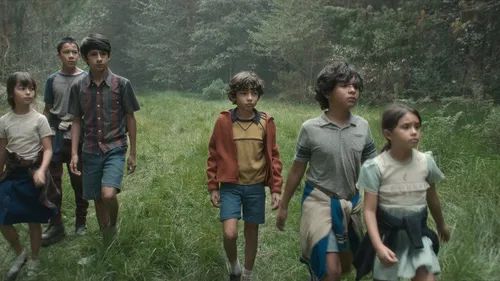
Season 1 · Episode 6
The Hazy Forest
B2Mexican on Netflix
 Mexicanon Netflix
Betrayal comes in the form of a phone call, as Miguel and his friends set out to rescue Felipe. Rodrigo makes a decision with devastating consequences.
24 words and expressions11 free to read and keep
Keep one and it comes back tomorrow, then 3 days, then a week, until you know it.
Worth remembering from this episode
Ordered by what we think matters most.
finca
rural estate, farm propertynoun (f)Mi abuelo tiene una finca cafetera en las montañas de Veracruz.My grandfather has a coffee estate in the mountains of Veracruz.recompensa
reward (monetary)noun (f)Ofrecieron una recompensa de cien mil pesos por información sobre el robo.They offered a reward of one hundred thousand pesos for information about the robbery.chofer
driver, chauffeurnoun (m/f)El chofer llegó tarde porque había mucho tráfico en la autopista.The driver arrived late because there was heavy traffic on the highway.secuestro
kidnappingnoun (m)El secuestro del empresario mantuvo a toda la ciudad en alerta.The businessman's kidnapping kept the entire city on alert.traicionar
to betrayverbNunca traicionaría a mis amigos por dinero.I would never betray my friends for money.pelarse
to flee, to get out fast (colloquial Mexican Spanish)verb (reflexive)Cuando llegó la policía, los muchachos ya se habían pelado por la puerta trasera.By the time the police arrived, the guys had already bolted out the back door.echar de cabeza
to rat someone out, to snitch on someoneexpressioncolloquialLiterally 'to throw headfirst.' In Mexican colloquial use it means to inform on or implicate someone to authorities. Non-compositional: the literal image gives no clue to the meaning.
Su propio socio lo echó de cabeza cuando lo agarró la policía.His own partner ratted him out when the police caught him.chaneque
chaneque (spirit creature from Mesoamerican folklore that guards nature and can steal a person's soul)noun (m)Los abuelos del pueblo les contaban a los niños historias de chaneques para que no se alejaran del camino.The village grandparents told children stories about chaneques so they would not stray from the path.cada quien se rasca con sus uñas
everyone fends for themselves, every man for himselfexpressioncolloquialLiterally 'everyone scratches themselves with their own nails.' A fixed Mexican idiom signaling that cooperation is over and individuals must look out for themselves. Non-compositional: the nail-scratching image does not convey the meaning on its own.
Cuando la empresa quebró, cada quien se rascó con sus uñas para conseguir otro trabajo.When the company went under, everyone had to fend for themselves to find another job.
vulgar2 more entries, marked strong language because the episode uses them.Show themHide them
chingada madre
expression of strong frustration or shock, roughly 'damn it' or 'son of a bitch'expressionvulgarOne of the most intensely vulgar expressions in Mexican Spanish. Used to vent sudden anger or disbelief. Not appropriate in formal or mixed company. The word 'chingada' alone (and its many derivatives) is one of the defining strong expletives of Mexican profanity.
¡Chingada madre, se me olvidó el pasaporte en la casa!Damn it, I left my passport at home!no chingues
no way, you're kidding me, stop messing aroundexpressionvulgarExpresses disbelief or dismissal. Softer alternatives include 'no manches' or 'no mames', but 'no chingues' is the blunter, more vulgar version. Very common in informal Mexican speech between peers.
¿Tres horas de espera? ¡No chingues, ya me voy!Three hours of waiting? No way, I'm out of here!
11 worth keeping from this episode. Free to read and keep.
An account is all it takes to keep them.
What Pro opens
- 10 more words and 3 more expressions here, and every entry in every other pack.
- Examples spoken in the show’s own dialect, not a browser voice.
Get Pro ›$59 $29.50 a year, or $8 $4 a month in USD. Early bird, 50% off for life. Cancel anytime.