‹ I'm Not Afraid: all episodes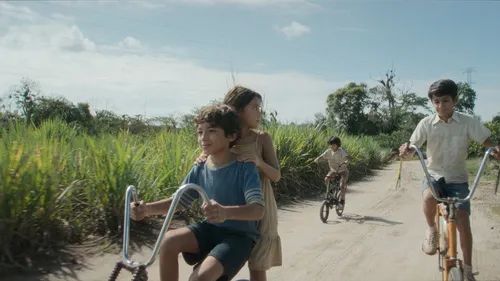
Season 1 · Episode 1
The Witch
C1Mexican on Netflix
 Mexicanon Netflix
Miguel, María, Chuy and their friends just want to play football – until one of them goes missing, and rumors of a forest witch stealing kids abound.
27 words and expressions10 free to read and keep
Keep one and it comes back tomorrow, then 3 days, then a week, until you know it.
Worth remembering from this episode
Ordered by what we think matters most.
órale
okay, let's go, come on, alright (multipurpose expression of agreement, encouragement, or urging)expressioncolloquialOne of the most versatile terms in Mexican Spanish. Tone and context determine whether it means agreement ('okay, sure'), encouragement ('go for it'), or impatience ('hurry up'). Not used in the same way outside Mexico.
Órale, ya son las ocho, hay que salir.Come on, it's already eight o'clock, we need to leave.bruja
witchnoun (f)El cuento habla de una bruja que vivía en las montañas.The story is about a witch who lived in the mountains.güey
dude, man, idiot (general-purpose address term or insult depending on tone)expressioncolloquialExtremely common in Mexican Spanish as a casual address term between friends, but can be insulting when directed at a stranger or said with hostility. The spelling 'wey' also appears.
Oye, güey, ¿ya viste el partido de anoche?Hey, dude, did you see last night's game?bosque
forest, woodsnoun (m)Detrás del rancho hay un bosque donde nadie entra de noche.Behind the ranch there is a forest where nobody goes in at night.cosecha
harvest, crop yieldnoun (f)Este año la cosecha de café fue mejor que el año pasado.This year's coffee harvest was better than last year's.cancha
playing field, courtnoun (f)Los niños se fueron a la cancha a jugar futbol toda la tarde.The kids went to the field to play soccer all afternoon.chaneque
chaneque (a spirit from Mesoamerican belief that can steal a person's soul)noun (m)Mi abuela dice que los chaneques rondan los ríos y los cerros.My grandmother says that chaneques roam the rivers and hills.plaga
plague, blight, infestationnoun (f)Una plaga destruyó la mitad de los árboles frutales en la región.A blight destroyed half the fruit trees in the region.curandera
healer, folk medicine practitionernoun (f)La curandera del pueblo usa hierbas para tratar enfermedades.The town healer uses herbs to treat illnesses.
vulgar1 more entry, marked strong language because the episode uses it.Show itHide it
pinche
damn, lousy, bloody (intensifier expressing annoyance or contempt)expressionvulgarCommon Mexican intensifier placed before a noun to express frustration or contempt. Its intensity can range from mild irritation to strong insult depending on tone. Originally meant 'kitchen boy' but is now used purely as an expletive modifier.
Se me olvidó el pinche paraguas y ahora estoy empapado.I forgot my damn umbrella and now I'm soaked.
10 worth keeping from this episode. Free to read and keep.
An account is all it takes to keep them.
What Pro opens
- 10 more words and 7 more expressions here, and every entry in every other pack.
- Examples spoken in the show’s own dialect, not a browser voice.
Get Pro ›$59 $29.50 a year, or $8 $4 a month in USD. Early bird, 50% off for life. Cancel anytime.