‹ Hilda: all episodes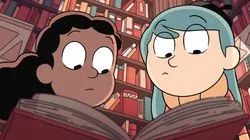
Season 1 · Episode 8
Chapter 8: The Tide Mice
B1LatAm dubRelaxed dialogueRelaxed: slower, easier to follow· 27 min on Netflix
on NetflixHilda realizes the importance of being detail-oriented when she casts a spell from a book of enchantments -- and fails to read the fine print.
26 words and expressions10 free to read and keep
Keep one and it comes back tomorrow, then 3 days, then a week, until you know it.
Worth remembering from this episode
Ordered by what we think matters most.
hechizo
spell, charmnoun (m)La anciana del cuento lanzó un hechizo sobre el príncipe.The old woman in the story cast a spell on the prince.audición
auditionnoun (f)Ella practicó durante semanas antes de su audición para la orquesta.She practiced for weeks before her audition for the orchestra.nota al pie
footnotenoun phrase (f)La nota al pie aclaraba el significado de varios términos técnicos.The footnote clarified the meaning of several technical terms.hechicero / bruja
sorcerer / witchnoun (m/f)En el libro, la bruja prepara pociones en su cabaña del bosque.In the book, the witch prepares potions in her forest cabin.anochecer
nightfall / to get dark, to become nightnoun (m) / verbAl anochecer, las calles del centro se llenan de gente.At nightfall, the streets downtown fill up with people.alma
soulnoun (f)En muchas culturas, se cree que la música llega directo al alma.In many cultures, it is believed that music reaches straight to the soul.desencantamiento
breaking of a spell, disenchantmentnoun (m)El desencantamiento requería pronunciar ciertas palabras al anochecer.Breaking the spell required saying certain words at nightfall.me lo comí
I bombed it / I messed it up completelyexpressioncolloquialLiteral meaning is 'I ate it,' but colloquially signals a total failure or embarrassing blunder. Widely understood across Latin America with a self-deprecating, frustrated tone. Common in informal speech among peers.
Estudié toda la semana para el examen y de todas formas me lo comí.I studied all week for the exam and I still bombed it.¿en qué pensabas?
what were you thinking? / what was going through your head?expressioncolloquialRhetorical question expressing disbelief or mild reproach at someone's poor judgment. The tone ranges from playfully scolding between friends to genuinely frustrated between adults and children. Very common in everyday speech.
¿En qué pensabas cuando saliste sin abrigo con este frío?What were you thinking when you left without a coat in this cold?la tercera es la vencida
the third time's the charmexpressioncolloquialFixed proverbial expression used to encourage someone after two previous failures, implying the next attempt will succeed. Carries an optimistic, motivating tone. Very widely used across Latin America in everyday conversation.
Fallaste dos veces en el casting, pero la tercera es la vencida.You've failed twice at the audition, but the third time's the charm.
10 worth keeping from this episode. Free to read and keep.
An account is all it takes to keep them.
What Pro opens
- 11 more words and 5 more expressions here, and every entry in every other pack.
- Examples spoken in the show’s own dialect, not a browser voice.
Get Pro ›$59 $29.50 a year, or $8 $4 a month in USD. Early bird, 50% off for life. Cancel anytime.