‹ Futurama: all episodes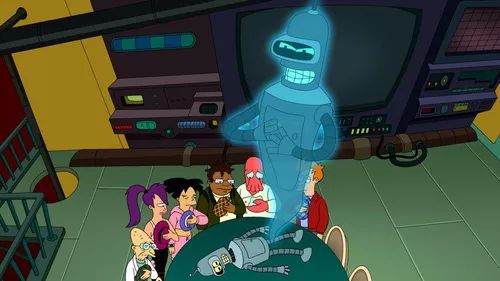
Season 6 · Episode 16
Ghost in the Machines
B2LatAm dubRelaxed dialogueRelaxed: slower, easier to followon Hulu
Fed up with the crew, Bender decides to kill himself using a suicide booth. After he dies, his software takes on a ghostly existence.
23 words and expressions7 free to read and keep
Keep one and it comes back tomorrow, then 3 days, then a week, until you know it.
Worth remembering from this episode
Ordered by what we think matters most.
estrella enana
dwarf starnoun phrase (feminine)Los astrónomos descubrieron una estrella enana a pocos años luz del sistema solar.Astronomers discovered a dwarf star just a few light-years from the solar system.sanguijuela
leechnoun (feminine)La sanguijuela se pegó a la pierna del buzo y no quería soltarse.The leech attached itself to the diver's leg and wouldn't let go.implosionar
to implodeverb (regular -ar)Si sellan el tanque sin ventilación, podría implosionar por la presión.If they seal the tank without ventilation, it could implode from the pressure.ecosistema
ecosystemnoun (masculine)La construcción del dique afectó gravemente el ecosistema del río.The construction of the dam severely affected the river's ecosystem.dispositivo
device, gadgetnoun (masculine)Activaron el dispositivo de emergencia cuando falló el sistema principal.They activated the emergency device when the main system failed.ADN
DNAnoun (masculine), abbreviationEl laboratorio preservó el ADN de varias especies antes de que se extinguieran.The laboratory preserved the DNA of several species before they went extinct.sabotaje
sabotagenoun (masculine)El ingeniero detectó señales claras de sabotaje en la maquinaria.The engineer detected clear signs of sabotage in the machinery.
7 worth keeping from this episode. Free to read and keep.
An account is all it takes to keep them.
What Pro opens
- 10 more words and 6 more expressions here, and every entry in every other pack.
- Examples spoken in the show’s own dialect, not a browser voice.
Get Pro ›$59 $29.50 a year, or $8 $4 a month in USD. Early bird, 50% off for life. Cancel anytime.