‹ El Ministerio del Tiempo: all episodes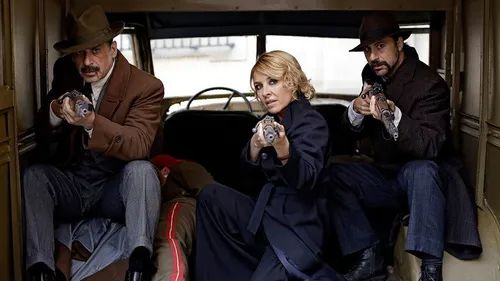
Season 4 · Episode 1
Lost in Time
C1CastilianRelaxed dialogueRelaxed: slower, easier to follow· 50 min on ViX Premium
 Castilianon ViX Premium
The patrol is reunited after three years to investigate a debuting actor who looks exactly like Julián, who was believed to have been killed in action.
29 words and expressions11 free to read and keep
Keep one and it comes back tomorrow, then 3 days, then a week, until you know it.
Worth remembering from this episode
Ordered by what we think matters most.
la misión
mission, assignmentnoun (feminine)Nos encargaron una misión muy delicada en el extranjero.We were assigned a very delicate mission abroad.tío / tía
mate, dude, pal (informal address)expressioncolloquialVery frequent informal term of address among friends. Does not mean 'uncle/aunt' in these contexts. Broadly equivalent to 'mate' or 'dude'.
Oye, tío, ¿quedamos esta tarde para tomar algo?Hey mate, shall we meet up this afternoon for a drink?el rodaje
filming, shoot (of a film)noun (masculine)El rodaje de la nueva serie comenzará en primavera.The filming of the new series will begin in spring.el franquismo / el Régimen
Francoism / the (Franco) Regimenoun (masculine)Muchos artistas tuvieron que exiliarse durante el Régimen.Many artists had to go into exile during the Regime.la dictadura
dictatorshipnoun (feminine)El país vivió bajo una dictadura durante casi cuatro décadas.The country lived under a dictatorship for nearly four decades.el infiltrado
infiltrator, mole, spy within a groupnoun (masculine)La policía descubrió que había un infiltrado en la organización.The police discovered there was an infiltrator in the organisation.la posguerra
post-war periodnoun (feminine)Durante la posguerra, muchas familias pasaron hambre y penuria.During the post-war period, many families went hungry and suffered hardship.ni pajolera idea
not the faintest clue, absolutely no ideaexpressioncolloquialEmphatic way of saying 'no tengo ni idea'. The intensifier 'pajolera' is used only in negative constructions and strengthens the denial. Slightly coarser than 'ni idea' but not strongly offensive.
Me preguntaron por el reglamento y no tenía ni pajolera idea de lo que decía.They asked me about the regulations and I didn't have the faintest clue what it said.¡chorprecha!
surprise! (comedic mispronunciation of 'sorpresa')expressioncolloquialA well-known catchphrase associated with the comedian Chiquito de la Calzada, referenced in the dialogue. Purely humorous, used to announce an unexpected appearance or reveal. Not a word in standard Spanish; its comic value comes from its deliberate distortion.
Apareció en la fiesta sin avisar y gritó '¡chorprecha!' al entrar.He showed up at the party without warning and shouted 'chorprecha!' as he walked in.delatar
to denounce, to inform on, to give someone awayverbAlguien les delató y la policía secreta llegó antes que ellos.Someone informed on them and the secret police arrived before they did.
vulgar1 more entry, marked strong language because the episode uses it.Show itHide it
joder
damn, bloody hell, for fuck's sake (expletive of frustration or surprise)expressionvulgarOne of the most common expletives in everyday speech. The force ranges from mild irritation to strong shock depending on tone and context. Can also be used as a filler between thoughts.
¡Joder, se me ha vuelto a olvidar el móvil en casa!For fuck's sake, I've left my phone at home again!
11 worth keeping from this episode. Free to read and keep.
An account is all it takes to keep them.
What Pro opens
- 10 more words and 8 more expressions here, and every entry in every other pack.
- Examples spoken in the show’s own dialect, not a browser voice.
Get Pro ›$59 $29.50 a year, or $8 $4 a month in USD. Early bird, 50% off for life. Cancel anytime.