‹ El Ministerio del Tiempo: all episodes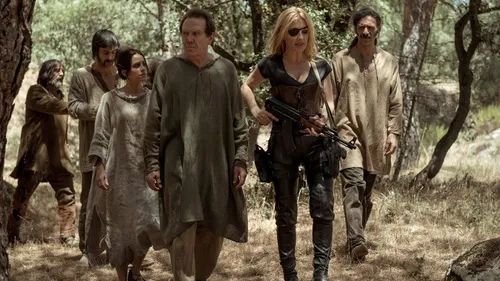
Season 3 · Episode 13
Between Two Times
C1CastilianRelaxed dialogueRelaxed: slower, easier to follow· 50 min on ViX Premium
 Castilianon ViX Premium
The 1966 debut of a TV series about the Ministry of Time threatens to prevent Chicho Ibáñez Serrador's "Historias para no dormir" from ever premiering.
27 words and expressions12 free to read and keep
Keep one and it comes back tomorrow, then 3 days, then a week, until you know it.
Worth remembering from this episode
Ordered by what we think matters most.
la puerta del tiempo
time door / portal through timenoun phrase (f)Descubrieron una puerta del tiempo escondida detrás de un antiguo armario.They discovered a time door hidden behind an old wardrobe.el rodaje
filming / shootnoun (m)El rodaje de la serie se llevó a cabo en distintas ciudades del norte.The filming of the series took place in different cities in the north.el guionista
screenwriter / scriptwriternoun (m)El guionista tardó dos años en terminar el primer borrador de la película.The screenwriter took two years to finish the first draft of the film.el plató
TV/film studio setnoun (m)Todos los actores se reunieron en el plató antes de empezar a grabar.All the actors gathered on the studio set before starting to record.emitir
to broadcast / to airverbLa cadena decidió emitir el documental a medianoche.The channel decided to broadcast the documentary at midnight.la figuración
extras (collective term for background actors in a production)noun (f)La figuración tuvo que esperar horas para rodar una sola escena.The extras had to wait hours to film a single scene.la leche
damn / wow / bloody hell (exclamation of surprise or emphasis)expressioncolloquialExtremely versatile intensifier. Tone determines whether it is positive surprise, negative surprise, or simple emphasis. One of the most common colloquial exclamations.
¡La leche, qué frío hace esta mañana!Bloody hell, it's so cold this morning!la temporada
season (of a TV show)noun (f)La segunda temporada fue mucho más emocionante que la primera.The second season was much more exciting than the first.el capítulo piloto
pilot episodenoun phrase (m)El capítulo piloto convenció a los productores de seguir adelante con el proyecto.The pilot episode convinced the producers to move forward with the project.
vulgar3 more entries, marked strong language because the episode uses them.Show themHide them
cojonudo/a
brilliant / fantastic / greatexpressionvulgarDerived from 'cojones'. Very common in casual speech and carries strong positive enthusiasm. Completely unremarkable in informal contexts between friends.
La actuación de anoche fue cojonuda, no me la esperaba tan buena.Last night's performance was brilliant. I didn't expect it to be that good.¡no me jodas!
you're kidding! / no way! / give me a break!expressionvulgarExpresses disbelief or mild outrage. Very high-frequency in everyday speech. Can be incredulous, annoyed, or even amused depending on tone.
¿Te han dado el trabajo? ¡No me jodas, qué alegría!They gave you the job? No way, how fantastic!la hemos cagado / la he cagado
we've/I've screwed up / we've/I've messed upexpressionvulgarLiteral meaning is vulgar but the phrase is used casually to mean a mistake was made. Common in speech without necessarily sounding extremely coarse.
La hemos cagado: reservamos las entradas para el día equivocado.We've screwed up, we booked the tickets for the wrong day.
12 worth keeping from this episode. Free to read and keep.
An account is all it takes to keep them.
What Pro opens
- 9 more words and 6 more expressions here, and every entry in every other pack.
- Examples spoken in the show’s own dialect, not a browser voice.
Get Pro ›$59 $29.50 a year, or $8 $4 a month in USD. Early bird, 50% off for life. Cancel anytime.