‹ Club de Cuervos: all episodes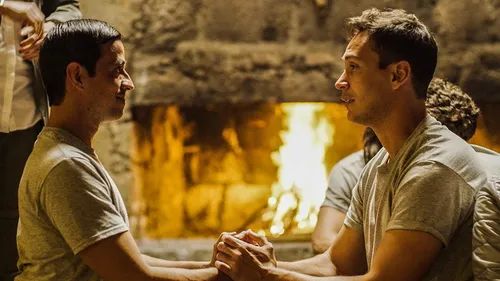
Season 4 · Episode 8
Concentration Camp
C1MexicanFast dialogueFast: quicker, harder to follow· 40 min on Netflix
 Mexicanon Netflix
The Cuervos go on a retreat to unplug from social media, but Isabel and Rafa's feud and a confession from Emaíl threaten the team-building dynamic.
28 words and expressions11 free to read and keep
Keep one and it comes back tomorrow, then 3 days, then a week, until you know it.
Worth remembering from this episode
Ordered by what we think matters most.
güey
dude, man, buddy (also used as a filler)expressioncolloquialExtremely common in everyday Mexican and Mexican-American speech. Can be affectionate between friends or neutral. Spelling variant 'wey' is also very common in writing. Never formal.
¿Ya viste eso, güey? No lo puedo creer.Did you see that, dude? I can't believe it.a ver
let's see, okay now, alright (discourse marker)expressioncolloquialUsed constantly to get attention, pause, or organize what one is about to say. Not 'a haber', different from the verb. Functions like 'okay, look' or 'alright, listen' depending on tone.
A ver, explícame otra vez cómo funciona eso.Okay, explain to me again how that works.liguilla
playoff round (in Mexican soccer league format)noun (f)El equipo terminó en quinto lugar, pero alcanzó la liguilla.The team finished in fifth place but made it to the playoff round.concentración
team training camp / isolation camp before a matchnoun (f)Los jugadores se fueron a concentración tres días antes del partido.The players went to training camp three days before the match.entrenador
coach, trainernoun (m)El entrenador les exigió más disciplina durante los entrenamientos.The coach demanded more discipline from them during practice.traidor
traitornoun (m)Lo llamaron traidor cuando se fue al equipo rival.They called him a traitor when he left for the rival team.retiro
retreat, withdrawal (here: team retreat / training getaway)noun (m)El club organizó un retiro en las montañas para preparar al equipo.The club organized a mountain retreat to prepare the team.directora deportiva
sporting director (female)noun phrase (f)La directora deportiva negoció el contrato del nuevo delantero.The sporting director negotiated the new striker's contract.sabotear
to sabotageverbAlguien intentó sabotear el sistema eléctrico del edificio.Someone tried to sabotage the building's electrical system.
vulgar2 more entries, marked strong language because the episode uses them.Show themHide them
chingado
damn, fucking (intensifier/expletive)expressionvulgarOne of the most versatile and frequently used vulgar words in Mexican Spanish. Appears in many compound expressions (a la chingada, qué chingón, me chingaste). Context determines exact meaning. High emotional charge.
Se me cayó el café sobre el teclado. ¡Chingado!I spilled my coffee on the keyboard. Damn it!ni madres
no way, absolutely notexpressionvulgarStrong Mexican emphatic refusal. Considerably stronger than a simple 'no'. Common in heated conversation. Related to the broader 'madres' family of expressions.
¿Que trabajemos gratis? Ni madres.Work for free? No way in hell.
11 worth keeping from this episode. Free to read and keep.
An account is all it takes to keep them.
What Pro opens
- 10 more words and 7 more expressions here, and every entry in every other pack.
- Examples spoken in the show’s own dialect, not a browser voice.
Get Pro ›$59 $29.50 a year, or $8 $4 a month in USD. Early bird, 50% off for life. Cancel anytime.