‹ One Hundred Years of Solitude: all episodes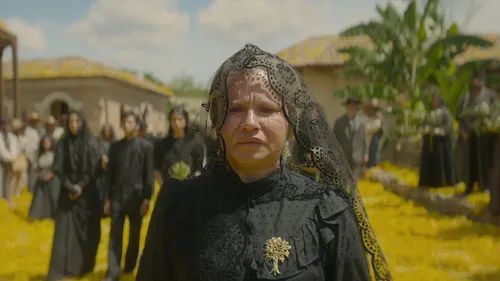
Season 1 · Episode 8
So Many Flowers Fell from the Sky
C1Colombian on Netflix
 Colombianon Netflix
Years later, when Aureliano reveals his war plans for Macondo, a heartbroken Ursula comes to a shocking realization about her family.
26 words and expressions11 free to read and keep
Keep one and it comes back tomorrow, then 3 days, then a week, until you know it.
Worth remembering from this episode
Ordered by what we think matters most.
condena
sentence, convictionnoun (feminine)El juez leyó la condena frente a toda la sala.The judge read the sentence in front of the entire courtroom.fusilamiento
execution by firing squadnoun (masculine)El fusilamiento del prisionero conmocionó a toda la región.The execution of the prisoner shocked the entire region.presagio
omen, premonitionnoun (masculine)Sintió un presagio oscuro antes de salir de casa.She felt a dark omen before leaving the house.pena de muerte
death penaltynoun phrase (feminine)Muchos países han abolido la pena de muerte.Many countries have abolished the death penalty.tregua
truce, ceasefirenoun (feminine)Los dos bandos acordaron una tregua de tres días.Both sides agreed to a three-day truce.rebelión
rebellion, revoltnoun (feminine)Los líderes fueron juzgados por rebelión contra el Estado.The leaders were tried for rebellion against the State.guachafita
commotion, rowdy disorder, ruckusexpressioncolloquialTypical Colombian and Venezuelan slang for a noisy, chaotic scene. Often used to tell people to settle down or disperse. Carries a dismissive, authoritative tone when used as a command.
¡Se acabó la guachafita, todo el mundo a trabajar!The ruckus is over, everyone get back to work!godos
Conservatives (political insult), also used as a general term for the ruling class or the enemyexpressioncolloquialIn Colombian political history, godo was a derogatory term used by Liberals to refer to Conservative party members. It evokes the colonial Spanish ruling class. Still appears in historical and heated political contexts.
Mi abuelo siempre decía que los godos no dejaban progresar al pueblo.My grandfather always said that the Conservatives wouldn't let the people move forward.mamado
exhausted, fed up, sick and tired of somethingexpressioncolloquialIn Colombia, mamado most commonly means tired of something or worn out by a situation, not physically sleepy. The context is usually frustration or defeat after prolonged effort or endurance.
Estoy mamado de esperar, llevan horas en esa reunión.I'm fed up with waiting, they've been in that meeting for hours.pelotón de fusilamiento
firing squadnoun phrase (masculine)El soldado fue llevado ante el pelotón de fusilamiento al amanecer.The soldier was brought before the firing squad at dawn.
vulgar1 more entry, marked strong language because the episode uses it.Show itHide it
carajo
damn it, hell (emphatic expletive)expressionvulgarVery common Colombian intensifier used to express frustration, urgency, or strong emotion. Can be added after a command to sharpen it, or stand alone as an exclamation. Not considered extremely offensive but is distinctly coarse.
¡Cierre esa puerta, carajo, que está entrando frío!Close that door, damn it, it's cold coming in!
11 worth keeping from this episode. Free to read and keep.
An account is all it takes to keep them.
What Pro opens
- 10 more words and 5 more expressions here, and every entry in every other pack.
- Examples spoken in the show’s own dialect, not a browser voice.
Get Pro ›$59 $29.50 a year, or $8 $4 a month in USD. Early bird, 50% off for life. Cancel anytime.