‹ One Hundred Years of Solitude: all episodes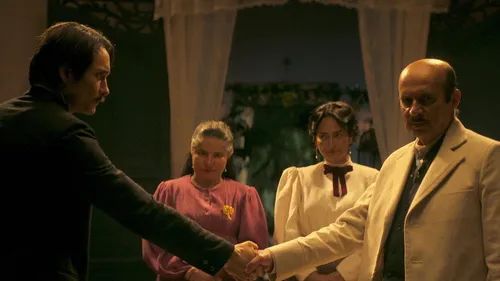
Season 1 · Episode 4
The Chestnut Tree
B2Colombian on Netflix
 Colombianon Netflix
A new mayor and his family settle in Macondo. Aureliano experiences love for the first time, while a death drives José Arcadio into madness.
24 words and expressions11 free to read and keep
Keep one and it comes back tomorrow, then 3 days, then a week, until you know it.
Worth remembering from this episode
Ordered by what we think matters most.
corregidor
magistrate / local government officialnoun (masculine)El corregidor llegó al pueblo con documentos del gobierno central.The magistrate arrived in town with documents from the central government.cadáver
corpse / dead bodynoun (masculine)Las autoridades encontraron el cadáver a orillas del río.The authorities found the corpse on the riverbanks.pacto
pact / agreementnoun (masculine)Los dos líderes firmaron un pacto de no agresión.The two leaders signed a non-aggression pact.compadre
close friend / buddy (also formal: godfather of one's child)expressioncolloquialWidely used in Colombian everyday speech as a warm term of address between men who are close friends or allies. The original meaning refers to the reciprocal relationship between a child's father and godfather, but in casual use it simply signals trust and solidarity.
Compadre, hace días no lo veía por aquí, ¿cómo le ha ido?Hey buddy, I haven't seen you around in days, how have you been?hembra
woman / female (informal, used admiringly or crudely)expressioncolloquialLiterally means 'female' in biological terms. In Colombian colloquial male speech it is used to refer to a woman one finds attractive. The tone can range from admiring to objectifying depending on context and speaker.
Los amigos no paraban de hablar de esa hembra que habían visto en la fiesta.The friends wouldn't stop talking about that woman they had seen at the party.de la buena / de la mala
the easy way / the hard wayexpressioncolloquialA fixed paired expression used as a threat or ultimatum. 'Por la buena' means cooperating willingly; 'por la mala' means being forced. Very common in confrontational or authoritative speech in Colombia.
Entrégame las llaves por la buena, porque por la mala te va a ir peor.Hand over the keys the easy way, because the hard way will be worse for you.impúber
prepubescent / underage (not yet of marriageable age)adjectiveLa ley protege a toda persona impúber de contraer matrimonio.The law protects every prepubescent person from entering into marriage.laico
secular / non-religious / layadjectiveEl colegio laico no tiene ninguna afiliación con ninguna iglesia.The secular school has no affiliation with any church.concebir
to conceive (a child) / to imagineverbDecidieron esperar dos años antes de concebir un hijo.They decided to wait two years before conceiving a child.taller
workshop / studionoun (masculine)El artesano pasaba horas en su taller fabricando muebles de madera.The craftsman spent hours in his workshop making wooden furniture.
vulgar1 more entry, marked strong language because the episode uses it.Show itHide it
jodido
screwed up / wrecked / in a bad stateexpressionvulgarVery common in Colombian informal speech across social classes. Depending on context, it can mean someone is in trouble, emotionally wrecked, or something is broken. Not considered extremely offensive in casual settings among friends, but would be inappropriate in formal contexts.
Después de ese accidente quedé jodido por varias semanas.After that accident I was in a bad state for several weeks.
11 worth keeping from this episode. Free to read and keep.
An account is all it takes to keep them.
What Pro opens
- 10 more words and 3 more expressions here, and every entry in every other pack.
- Examples spoken in the show’s own dialect, not a browser voice.
Get Pro ›$59 $29.50 a year, or $8 $4 a month in USD. Early bird, 50% off for life. Cancel anytime.