‹ La Reina del Sur: all episodes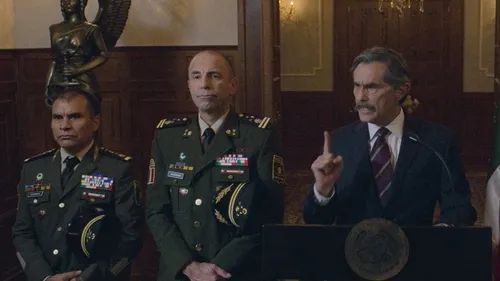
Season 3 · Episode 33
A Favor Is Repaid With a Favor
C1Latin American42 min on Netflix
on NetflixSofía and Mateo find a hidden room inside the gallery. Mortati wonders what Teresa wants in return for saving his life. The DEA pressures Gen. Garrido.
29 words and expressions11 free to read and keep
Keep one and it comes back tomorrow, then 3 days, then a week, until you know it.
Worth remembering from this episode
Ordered by what we think matters most.
vigilante
security guard, watchmannoun (masculine)El vigilante del edificio revisa las cámaras cada hora.The building security guard checks the cameras every hour.alarma
alarm, security alarmnoun (feminine)La alarma del museo sonó cuando alguien abrió la ventana trasera.The museum alarm went off when someone opened the back window.man
dude, guy, personexpressioncolloquialColombian and broader Latin American youth slang borrowed from English 'man.' Used to refer to any person, male or female in casual speech, similar to 'dude' or 'guy' in US English.
El man que me arregló el celular cobró demasiado caro.The guy who fixed my phone charged way too much.micrófono
microphone; here specifically a hidden listening device (bug)noun (masculine)La policía sembró un micrófono en la oficina del sospechoso.The police planted a listening device in the suspect's office.chapa
lock, door locknoun (feminine)El carpintero cambió la chapa de la puerta principal después del robo.The carpenter changed the lock on the front door after the robbery.infiltrar
to infiltrate, to plant (a person) inside an organizationverbEl agente logró infiltrar a un detective en la banda criminal.The agent managed to infiltrate a detective into the criminal gang.precolombino
pre-Columbian (referring to artifacts or cultures from the Americas before European contact)adjective / nounEse mercado vende réplicas de piezas precolombinas a los turistas.That market sells replicas of pre-Columbian pieces to tourists.parce
buddy, pal, broexpressioncolloquialColombian Spanish. Very common term of address among close friends or acquaintances, roughly equivalent to 'bro' or 'man' in casual US English. Signals Colombian regional origin of the speaker.
Oye, parce, ¿me prestas tu carro esta noche?Hey buddy, can you lend me your car tonight?tráfico de arte
art trafficking, illegal trade in artworksnoun phrase (masculine)Interpol investiga una red de tráfico de arte en Sudamérica.Interpol is investigating an art trafficking network in South America.
vulgar2 more entries, marked strong language because the episode uses them.Show themHide them
chingar
to screw over, to mess up (someone or something); intensely vulgar general-purpose expletiveexpressionvulgarMexican Spanish. One of the most charged words in Mexican colloquial speech. In this episode it carries the meaning of being wronged or defeated by someone. The phrase '¡nos chingaron!' means 'they screwed us over.' Avoid in formal or professional contexts.
Si no revisas el contrato bien, te pueden chingar con cargos escondidos.If you don't review the contract carefully, they can screw you over with hidden fees.gonorrea
literally a sexually transmitted infection; used as a strong insult meaning 'bastard,' 'piece of trash,' or as an intensifierexpressionvulgarColombian slang. Repurposed from the medical term into a versatile insult. Tone depends heavily on context, between close friends it can be almost affectionate, but in confrontation it is genuinely offensive. Marks the speaker as Colombian.
Ese gonorrea me debe dinero desde hace tres meses y no aparece.That bastard has owed me money for three months and he's nowhere to be found.
11 worth keeping from this episode. Free to read and keep.
An account is all it takes to keep them.
What Pro opens
- 10 more words and 8 more expressions here, and every entry in every other pack.
- Examples spoken in the show’s own dialect, not a browser voice.
Get Pro ›$59 $29.50 a year, or $8 $4 a month in USD. Early bird, 50% off for life. Cancel anytime.