‹ La Reina del Sur: all episodes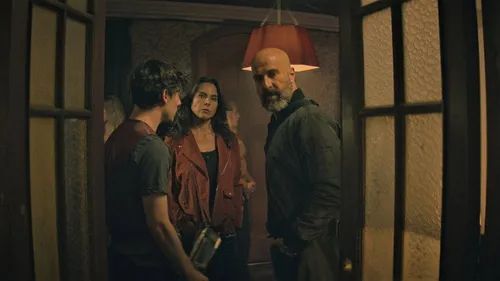
Season 3 · Episode 15
Bad Luck
C1Latin American42 min on Netflix
on NetflixGenoveva and Nacho are caught. Sofía steps up to the plate to help a wounded Rocío. At the casino, Fedor and the loan shark set their plan in motion.
29 words and expressions11 free to read and keep
Keep one and it comes back tomorrow, then 3 days, then a week, until you know it.
Worth remembering from this episode
Ordered by what we think matters most.
prestamista
moneylender, loan sharknoun (masculine/feminine)El prestamista le cobró intereses altísimos por el préstamo.The moneylender charged him very high interest on the loan.herida
wound, injurynoun (feminine)La herida en su brazo tardó semanas en sanar.The wound on his arm took weeks to heal.güey
dude, man, buddyexpressioncolloquialAlso spelled 'wey'. The most common address term among male peers in Mexican Spanish. Can express mild surprise, casual address, or mild reproach. Not inherently offensive between friends, but condescending toward strangers. Appears in both familiar and tense conversations in this episode.
Oye, güey, ¿ya viste que mañana no hay clases?Hey, dude, did you see that there's no school tomorrow?bala
bulletnoun (feminine)El médico tuvo que sacar la bala antes de que se infectara.The doctor had to remove the bullet before it got infected.barajador
card dealer, shufflernoun (masculine)El barajador mezcló las cartas frente a todos los jugadores.The card dealer shuffled the cards in front of all the players.pelarse
to get out of here fast, to boltexpressioncolloquialMexican slang for leaving quickly, usually to escape a dangerous or undesirable situation. Equivalent to 'to take off' or 'to split'. Very vivid and urgent in tone.
Cuando llegó la policía, todos se pelaron por la puerta trasera.When the police arrived, everyone bolted out the back door.trato
deal, agreementnoun (masculine)Firmaron el trato después de horas de negociación.They signed the deal after hours of negotiation.guarura
bodyguard, security guardnoun (masculine)El político salió rodeado de guaruras por todas partes.The politician walked out surrounded by bodyguards on all sides.mercancía
merchandise, goods (often used as a drug trafficking euphemism)noun (feminine)Usaban la bodega para guardar la mercancía sin levantar sospechas.They used the warehouse to store the merchandise without raising suspicions.
vulgar2 more entries, marked strong language because the episode uses them.Show themHide them
cabrón
bastard, asshole (strong insult, also used between close friends as an intensifier)expressionvulgarOne of the most frequently heard insults in Mexican Spanish. Tone shifts dramatically by context, it can signal deep anger between enemies or rough affection between close male friends. In this episode it appears almost exclusively in anger.
¡No me hables así, cabrón, que te estoy haciendo un favor!Don't talk to me like that, asshole. I'm doing you a favor!chingados
damn, the hell (intensifier expressing frustration or anger)expressionvulgarDerives from 'chingar', Mexico's most versatile vulgar verb. In questions like '¿qué chingados...?' it means 'what the hell...?' Used here to amplify impatience or anger. Very common in informal Mexican speech across all social classes.
¿Qué chingados está pasando aquí? Nadie me explica nada.What the hell is going on here? Nobody explains anything to me.
11 worth keeping from this episode. Free to read and keep.
An account is all it takes to keep them.
What Pro opens
- 10 more words and 8 more expressions here, and every entry in every other pack.
- Examples spoken in the show’s own dialect, not a browser voice.
Get Pro ›$59 $29.50 a year, or $8 $4 a month in USD. Early bird, 50% off for life. Cancel anytime.