‹ Green Frontier: all episodes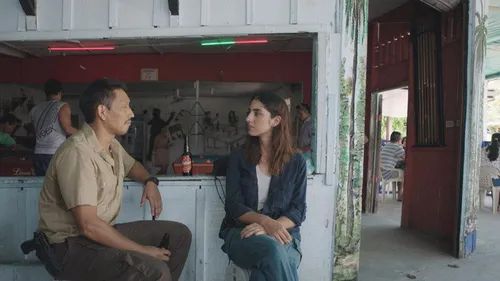
Season 1 · Episode 3
The Tree
C1Colombian40 min on Netflix
 Colombianon Netflix
Helena connects the dots from the murders to her tortured personal story. Almost 50 years earlier, Yua's tribe battled Joseph's men.
29 words and expressions13 free to read and keep
Keep one and it comes back tomorrow, then 3 days, then a week, until you know it.
Worth remembering from this episode
Ordered by what we think matters most.
la selva
jungle, rainforestnoun (f)Los científicos pasaron meses estudiando la fauna de la selva amazónica.The scientists spent months studying the wildlife of the Amazon rainforest.los madereros
loggers, timber workersnoun (m pl)Los madereros llegaron con motosierras y destruyeron hectáreas de bosque nativo.The loggers arrived with chainsaws and destroyed hectares of native forest.el cuerpo
body, corpse (in investigative context)noun (m)Las autoridades encontraron el cuerpo cerca del río al amanecer.The authorities found the body near the river at dawn.la Manigua
the jungle, the deep forest (Colombian/Amazonian term)noun (f)Los abuelos de la comunidad conocían cada sendero de la Manigua.The community elders knew every path through the deep jungle.toca
one has to, you have to, it's necessary (impersonal obligation)expressioncolloquialShort for 'le toca' or impersonal 'toca' + infinitive. Extremely common in Colombian speech to express obligation or necessity. Equivalent to 'hay que' but more conversational and direct. Very characteristic of Colombian everyday speech.
Toca salir temprano si queremos llegar a tiempo.We have to leave early if we want to get there on time.la tribu
tribe, indigenous groupnoun (f)La tribu había vivido en ese territorio durante cientos de años sin contacto exterior.The tribe had lived in that territory for hundreds of years without outside contact.el incendio
fire, blazenoun (m)El incendio consumió toda la construcción antes de que llegaran los bomberos.The blaze consumed the entire building before the firefighters arrived.paraco
paramilitary member (pejorative/accusatory)expressioncolloquialShort for 'paramilitar'. Carries heavy political and historical weight in Colombia. Calling someone a paraco is a serious accusation linked to right-wing paramilitary groups responsible for violence during the armed conflict.
En el pueblo todos sabían que ese tipo había sido paraco durante años.Everyone in town knew that guy had been a paramilitary for years.desaparecer
to disappear; (transitive, criminal context) to make someone disappearverbEn esa época, los paramilitares amenazaban con desaparecer a cualquiera que hablara.At that time, the paramilitaries threatened to make anyone who spoke out disappear.la fiscalía
prosecutor's office, attorney general's officenoun (f)La fiscalía abrió una investigación formal por los delitos cometidos en la zona.The prosecutor's office opened a formal investigation into the crimes committed in the area.
vulgar3 more entries, marked strong language because the episode uses them.Show themHide them
hijo de puta
son of a bitch (strong insult)expressionvulgarOne of the most common strong insults in Colombian Spanish. Used in confrontations, expressions of anger, or sometimes (between close friends) as a rough term of surprise or affection. In this dialogue it always signals hostility.
Ese hijo de puta se fue con todo el dinero de la comunidad.That son of a bitch left with all the community's money.malparido
son of a bitch, bastard (extremely strong insult)expressionvulgarOne of the strongest insults in Colombian Spanish. Literally 'badly born'. Used in heated confrontations and signals extreme anger or contempt. Not used lightly.
Ese malparido me robó la plata y desapareció sin decir nada.That son of a bitch stole my money and disappeared without a word.joder
to screw over, to mess up, to bother (depending on context)expressionvulgarIn Colombian usage, 'joder' means to ruin, harm, or mess with someone. It does not carry the same primary sexual meaning it has in other varieties of Spanish. 'Jodida' as an adjective means troublesome, difficult, or messed up.
Si no arreglamos esto hoy, nos van a joder el contrato entero.If we don't fix this today, they're going to screw up the whole contract for us.
13 worth keeping from this episode. Free to read and keep.
An account is all it takes to keep them.
What Pro opens
- 10 more words and 6 more expressions here, and every entry in every other pack.
- Examples spoken in the show’s own dialect, not a browser voice.
Get Pro ›$59 $29.50 a year, or $8 $4 a month in USD. Early bird, 50% off for life. Cancel anytime.