‹ Envious: all episodes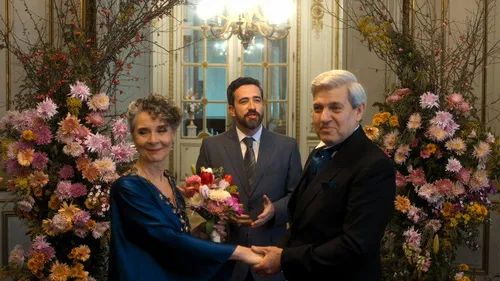
Season 4 · Episode 6
Blended Family
C1ArgentineFast dialogueFast: quicker, harder to follow on Netflix
 Argentineon Netflix
Vicky's therapy session has a surprise guest. Wedding bells ring doubts for Vicky and Caro. Matías saves an impromptu wedding speech.
29 words and expressions11 free to read and keep
Keep one and it comes back tomorrow, then 3 days, then a week, until you know it.
Worth remembering from this episode
Ordered by what we think matters most.
dale
go ahead, okay, come on, sureexpressioncolloquialExtremely high-frequency filler and response word in Argentine speech. Can signal agreement, urging someone to act, or mild impatience depending on tone and context.
—¿Arrancamos? —Dale, ya estoy lista.—Shall we go? —Sure, I'm ready.careta
fake, two-faced, phonyexpressioncolloquialLiterally 'mask'. As an adjective or noun it describes someone who puts on a false front for social appearances. Very common in everyday Argentine speech.
No me gusta ese ambiente; toda la gente es muy careta.I don't like that scene; everyone there is really fake.bitácora
logbook, journalnoun (f)Cada noche escribo en mi bitácora lo que sentí durante el día.Every night I write in my journal what I felt during the day.discurso
speech, toastnoun (m)El padrino dio un discurso muy emotivo antes del brindis.The best man gave a very emotional speech before the toast.terapia
therapy, psychotherapynoun (f)Hace tres años que va a terapia y dice que le cambió la vida.She's been going to therapy for three years and says it changed her life.metida
nosy, meddlesomeexpressioncolloquialFrom 'meterse' (to stick one's nose in). Used as a mild self-deprecating or accusatory adjective. Not particularly harsh.
Soy muy metida, siempre quiero saber en qué andan los demás.I'm very nosy; I always want to know what everyone else is up to.diario íntimo
private diarynoun phrase (m)Desde chica guardo un diario íntimo donde escribo mis secretos.Since I was little I've kept a private diary where I write my secrets.amarga
bitter (personality), joylessadjective (f)Mi vecina es una amarga; nunca saluda a nadie en el pasillo.My neighbor is a bitter person; she never greets anyone in the hallway.madrastra
stepmothernoun (f)La madrastra de Julián lo lleva al colegio todos los días.Julián's stepmother takes him to school every day.duelo
grief, mourning; process of lossnoun (m)Hacer el duelo de algo que no fue requiere tiempo y paciencia.Grieving something that never was takes time and patience.
vulgar1 more entry, marked strong language because the episode uses it.Show itHide it
boludos
idiots, fools (dismissive)expressionvulgarOne of the most frequent Argentine vulgar terms. Between close friends it loses much of its sting and becomes almost affectionate, but directed at strangers or said with contempt it is genuinely insulting. Context and tone determine the weight.
¿Cómo pueden ser tan boludos y olvidarse de reservar la mesa?How can they be such idiots and forget to book the table?
11 worth keeping from this episode. Free to read and keep.
An account is all it takes to keep them.
What Pro opens
- 10 more words and 8 more expressions here, and every entry in every other pack.
- Examples spoken in the show’s own dialect, not a browser voice.
Get Pro ›$59 $29.50 a year, or $8 $4 a month in USD. Early bird, 50% off for life. Cancel anytime.