‹ Disenchantment: all episodes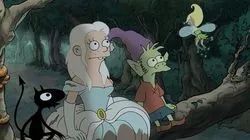
Season 1 · Episode 1
A Princess, an Elf, and a Demon Walk Into a Bar
C1LatAm dub28 min on Netflix
on NetflixPrincess Bean already has the wedding day blues when a mysterious figure arrives, claiming he's her personal demon. Elfo hates his happy homeland.
28 words and expressions11 free to read and keep
Keep one and it comes back tomorrow, then 3 days, then a week, until you know it.
Worth remembering from this episode
Ordered by what we think matters most.
demonio
demon; devilnoun (m)En esa película, el demonio se disfraza de persona normal.In that movie, the demon disguises itself as a normal person.deseo
wish; desirenoun (m)Cuando sopló las velas, pidió que se cumpliera su deseo.When she blew out the candles, she wished for her desire to come true.alianza
alliance; also wedding ringnoun (f)Los dos países firmaron una alianza para protegerse mutuamente.The two countries signed an alliance to protect each other.maldición
curse; also used as an exclamation meaning 'damn!'noun (f)Según la leyenda, una maldición caía sobre cualquiera que abriera la tumba.According to the legend, a curse fell upon anyone who opened the tomb.destino
destiny; fate; also destinationnoun (m)Ella no creía que su destino estuviera ya escrito.She didn't believe her destiny was already written.guarida
lair; hideout; dennoun (f)El villano tenía su guarida escondida en las montañas.The villain had his lair hidden in the mountains.a lo mejor
maybe / perhapsexpressioncolloquialExtremely common phrase expressing possibility or uncertainty. Unlike more formal equivalents, it carries a casual, conversational tone and is used across all social contexts. Notably, it does not trigger subjunctive mood in the following verb, which is a defining grammatical feature of its use.
A lo mejor llegamos tarde si no salimos ahorita.Maybe we'll be late if we don't leave right now.vínculo
bond; tie; linknoun (m)El vínculo entre los dos personajes se hace más fuerte con cada episodio.The bond between the two characters grows stronger with every episode.irse al garete
to fall apart / to go down the drainexpressioncolloquialNautical in origin, referring to a ship drifting out of control. Now used figuratively to describe plans, events, or situations that collapse or fail completely. Carries a tone of exasperation or resigned humor.
Habíamos planeado el viaje durante meses y se fue al garete por una tormenta.We had planned the trip for months and it fell apart because of a storm.zurrarse / zurrar
to beat up / to thrashexpressioncolloquialRefers to hitting or physically punishing someone, often used with a tone of threat or dark humor. Can describe a real beating or be used hyperbolically. In the reflexive form 'zurrarse,' it can also be vulgar slang for soiling oneself from fear, but context here is clearly physical punishment.
Como no dejes de molestar a tu hermano, te voy a zurrar con la chancla.If you don't stop bothering your brother, I'm going to thrash you with my sandal.
vulgar1 more entry, marked strong language because the episode uses it.Show itHide it
que te den
screw you / go to hellexpressionvulgarTruncated dismissive phrase expressing contempt or rejection toward a person or situation. The full implied phrase is highly offensive; the shortened form softens it only slightly. Used when someone is fed up and no longer cares about consequences.
¿Que siga las reglas de siempre? ¡Que te den, me voy a hacer lo que quiero!Follow the same old rules? Screw that, I'm doing what I want!
11 worth keeping from this episode. Free to read and keep.
An account is all it takes to keep them.
What Pro opens
- 11 more words and 6 more expressions here, and every entry in every other pack.
- Examples spoken in the show’s own dialect, not a browser voice.
Get Pro ›$59 $29.50 a year, or $8 $4 a month in USD. Early bird, 50% off for life. Cancel anytime.