‹ Green Frontier: all episodes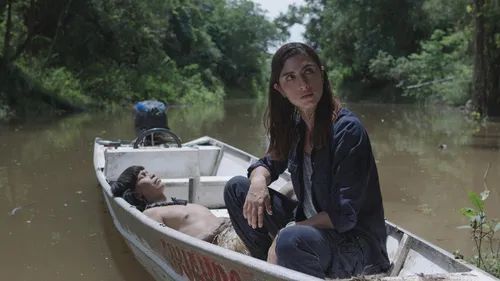
Season 1 · Episode 5
The Death
C1Colombian40 min on Netflix
 Colombianon Netflix
Helena and a local cop willing to help her bring the prisoner back to town. A flashback examines Helena's birth and mission.
26 words and expressions13 free to read and keep
Keep one and it comes back tomorrow, then 3 days, then a week, until you know it.
Worth remembering from this episode
Ordered by what we think matters most.
selva
jungle, rainforestnoun (f)La selva tropical alberga miles de especies que no existen en ningún otro lugar.The tropical jungle is home to thousands of species that exist nowhere else.vaina
thing, stuff, mess, situationexpressioncolloquialOne of the most versatile words in Colombian Spanish. Can refer to any object, situation, problem, or abstract concept. Completely non-offensive and used at all social levels. Context determines meaning entirely.
Esa vaina del contrato no me cuadra, hay algo raro ahí.That contract situation doesn't add up for me, there's something off.refuerzos
backup, reinforcementsnoun (m, plural)La patrulla pidió refuerzos porque la situación se salió de control.The patrol requested backup because the situation got out of control.toca
you have to, one has to (obligation)expressioncolloquialShort for 'le toca' or 'nos toca'. Used constantly in Colombian informal speech to express obligation or necessity. Functions like 'hay que' but sounds more personal and immediate.
Toca madrugar si quieren coger el bus de las cinco.You have to get up early if you want to catch the five o'clock bus.curare
curare (plant-based paralytic poison used on blowgun darts)noun (m)Los cazadores preparaban el curare con plantas de la selva amazónica.The hunters prepared the curare using plants from the Amazon jungle.veneno
poison, venomnoun (m)El médico advirtió que la planta producía un veneno muy peligroso.The doctor warned that the plant produced a very dangerous poison.sospechoso
suspect; suspiciousnoun/adjective (m)La policía retuvo al sospechoso durante varias horas para interrogarlo.The police held the suspect for several hours to question him.interrogar
to interrogate, to questionverbLos agentes llevaron al detenido a la oficina para interrogarlo.The agents took the detainee to the office to question him.dardo
dart (as in blowgun dart)noun (m)Los cazadores de la tribu usaban dardos envenenados para cazar animales pequeños.The tribe's hunters used poisoned darts to hunt small animals.cauchería
rubber plantation or rubber-extraction camp (historically sites of forced indigenous labor)noun (f)Las caucherías del siglo XIX fueron lugares de explotación brutal para los pueblos indígenas.The rubber camps of the 19th century were places of brutal exploitation for indigenous peoples.
vulgar3 more entries, marked strong language because the episode uses them.Show themHide them
hijueputa
son of a bitch (extremely strong insult)expressionvulgarOne of the most common strong insults in Colombian Spanish. Appears in many phonetic spellings: hijoeputa, hijueputa, hijuepucha (softened). Can be directed at a person or used as a general exclamation of anger or frustration. Very high frequency in heated confrontations.
Cuando le rayaron el carro, soltó un '¡hijueputa!' y golpeó el volante.When his car got scratched, he shouted 'son of a bitch!' and hit the steering wheel.huevón
idiot, dumbass (insult, but also affectionate between close friends depending on tone)expressionvulgarExtremely common in Colombian informal speech. Tone decides meaning completely: shouted in a fight it is a sharp insult; said warmly among close friends it is almost affectionate. In this episode it appears exclusively as an insult.
¡No seas huevón, devuelve esa plata antes de que te meta en un problema!Don't be an idiot, give that money back before you get yourself in trouble!malparido
bastard, son of a bitch (very strong insult, literally 'badly born')expressionvulgarA strong Colombian insult. More intense than huevón and on par with hijueputa in offensiveness. Used in direct confrontation to demean someone.
Le gritó malparido y le tiró la puerta en la cara.She screamed 'bastard' at him and slammed the door in his face.
13 worth keeping from this episode. Free to read and keep.
An account is all it takes to keep them.
What Pro opens
- 9 more words and 4 more expressions here, and every entry in every other pack.
- Examples spoken in the show’s own dialect, not a browser voice.
Get Pro ›$59 $29.50 a year, or $8 $4 a month in USD. Early bird, 50% off for life. Cancel anytime.