‹ Counterattack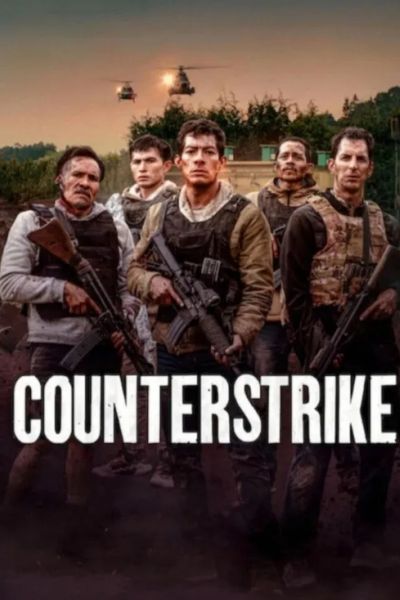
Film · 2025 · Action
Counterattack
Contraataque
C1Mexican85 minIMDb 6.0 on Netflix
 Mexicanon Netflix
When a hostage rescue mission creates a new enemy, Capt. Guerrero and his elite soldiers must face an ambush by a criminal group.
29 words and expressions12 free to read and keep
Keep one and it comes back tomorrow, then 3 days, then a week, until you know it.
Worth remembering from this film
Ordered by what we think matters most.
cubrir
to cover (in military/tactical sense: to provide covering fire or watch a position)verbTú avanza por la izquierda; yo te cubro desde aquí.You advance on the left; I'll cover you from here.cargador
magazine (firearm); also charger (phone/battery)noun (masculine)El soldado revisó que el cargador tuviera suficientes balas antes de avanzar.The soldier checked that the magazine had enough bullets before moving forward.garita
border checkpoint; guard postnoun (feminine)Tardamos dos horas en cruzar la garita por la cantidad de vehículos.We spent two hours getting through the checkpoint because of the number of vehicles.levantarse
to be kidnapped (in criminal slang context); literally: to get upverb (reflexive)En esa ciudad, era común que los negocios temieran que los levantaran si no pagaban.In that city, it was common for businesses to fear being kidnapped if they didn't pay.la maña
organized crime; criminal groups (collective term)expressioncolloquialShorthand for criminal organizations, particularly drug cartels. Used neutrally in narco-related contexts, not overtly insulting, just a label. Common in northern Mexico and in media covering organized crime.
En ese municipio, la maña controlaba hasta a los funcionarios.In that municipality, organized crime controlled even the officials.desplegar
to deploy; to spread out (troops or forces)verbEl comandante ordenó desplegar a los soldados por ambos flancos.The commander ordered the soldiers to deploy on both flanks.fosa
pit; mass gravenoun (feminine)Las autoridades descubrieron una fosa con varios cuerpos en las afueras del pueblo.Authorities discovered a pit with several bodies on the outskirts of town.cártel
cartel; organized criminal organizationnoun (masculine)El cártel controlaba el tráfico de drogas en toda la región.The cartel controlled drug trafficking throughout the entire region.retaguardia
rear guard; the back of a military formationnoun (feminine)Dos soldados se quedaron cubriendo la retaguardia mientras los demás avanzaban.Two soldiers stayed behind covering the rear guard while the others advanced.
vulgar3 more entries, marked strong language because the film uses them.Show themHide them
ya te cargó la chingada
you're screwed; it's over for you (strong threat or declaration of defeat)expressionvulgarA highly common Mexican vulgar expression using 'cargar' in the sense of being taken or done in. Delivered as a taunt or threat in confrontational situations. The subject can vary (ya lo cargó, ya nos cargó, etc.).
Cuando lo rodearon sin salida, uno de los captores le dijo que ya lo había cargado la chingada.When they surrounded him with no way out, one of the captors told him it was all over for him.ni madres
no way; absolutely not; not a chanceexpressionvulgarA blunt, emphatic negation. Stronger than a simple 'no'. Used to refuse, contradict, or dismiss something outright. Very common in informal Mexican speech.
¿Que le voy a pagar yo su deuda? ¡Ni madres!Me, pay his debt? No way in hell!a huevo
hell yes; absolutely; damn right (strong affirmation)expressionvulgarOne of the most frequent Mexican Spanish vulgar affirmatives. Used to express strong agreement, enthusiasm, or triumph. Tone can range from celebratory to aggressive depending on context.
¿Ganamos el partido? ¡A huevo que sí!Did we win the match? Hell yes we did!
12 worth keeping from this film. Free to read and keep.
An account is all it takes to keep them.
What Pro opens
- 9 more words and 8 more expressions here, and every entry in every other pack.
- Examples spoken in the show’s own dialect, not a browser voice.
Get Pro ›$59 $29.50 a year, or $8 $4 a month in USD. Early bird, 50% off for life. Cancel anytime.