‹ A Time For Bravery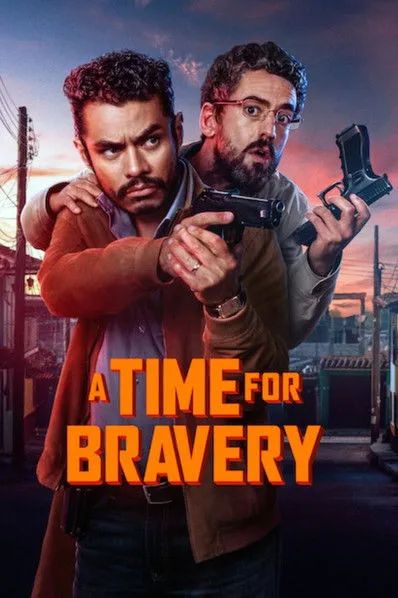
Film · 2025 · Comedy
A Time For Bravery
La hora de los valientes
C1Argentine107 minIMDb 6.2 on Netflix
 Argentineon Netflix
A psychoanalyst on community service aids an agent shattered by infidelity; together, they will confront danger and discover second chances.
30 words and expressions11 free to read and keep
Keep one and it comes back tomorrow, then 3 days, then a week, until you know it.
Worth remembering from this film
Ordered by what we think matters most.
güey
dude, man, buddy (general address between people, can also be mildly insulting depending on tone)expressioncolloquialOne of the most frequent words in informal Mexican speech. Between friends it is neutral or affectionate; said with contempt it becomes an insult. Also spelled 'wey'. Literal meaning (castrated ox) is entirely absent in everyday use.
Ese güey siempre llega tarde a todos lados.That dude always shows up late everywhere.uranio
uraniumnoun (masculine)El tráfico de uranio es uno de los delitos más graves a nivel internacional.Uranium trafficking is one of the most serious crimes at the international level.chamba
job, work, gigexpressioncolloquialStandard informal term for employment or a specific piece of work. Used across most of Latin America. Not derivable from its component sounds by a learner unfamiliar with it.
Lleva meses buscando chamba pero el mercado está muy difícil.She's been looking for work for months but the market is really tough.servicio comunitario
community service (as a legal sentence)noun phrase (masculine)El juez le impuso cien horas de servicio comunitario como parte de la condena.The judge imposed one hundred hours of community service as part of the sentence.híjole
wow, oh man, jeez (exclamation of surprise, mild alarm, or empathy)expressioncolloquialA very characteristically Mexican exclamation with no direct translation. Signals that the speaker is taken aback or impressed. Can be positive or negative depending on context. Completely opaque to a learner from the words alone.
Híjole, no sabía que el examen era hoy.Oh man, I didn't know the exam was today.encajuelado
body found in a car trunk; victim stuffed in a trunknoun/adjective (past participle used as noun)La policía encontró dos encajuelados en el parque industrial.The police found two bodies stuffed in car trunks at the industrial park.tonel
barrel, drum (large cylindrical container)noun (masculine)Transportaron el material peligroso en un tonel de plomo sellado.They transported the hazardous material in a sealed lead drum.desaparición
disappearancenoun (feminine)La familia presentó una denuncia de desaparición ante las autoridades.The family filed a missing persons report with the authorities.balística
ballistics (forensic analysis of firearms and projectiles)noun (feminine)El casquillo fue enviado al laboratorio de balística para su análisis.The shell casing was sent to the ballistics lab for analysis.casquillo
shell casing, cartridge casenoun (masculine)Los investigadores recolectaron cada casquillo que encontraron en la escena.The investigators collected every shell casing they found at the scene.
vulgar1 more entry, marked strong language because the film uses it.Show itHide it
no mames
no way, are you serious, that's unbelievable (expression of shock, disbelief, or protest)expressionvulgarExtremely common in Mexican Spanish and widely understood in informal contexts across Latin America. Tone shifts entirely with context: it can express genuine outrage, disbelief, or even playful exasperation. Literal words give no clue to this use.
¿No mames, me estás diciendo que perdiste las llaves otra vez?No way, are you telling me you lost the keys again?
11 worth keeping from this film. Free to read and keep.
An account is all it takes to keep them.
What Pro opens
- 11 more words and 8 more expressions here, and every entry in every other pack.
- Examples spoken in the show’s own dialect, not a browser voice.
Get Pro ›$59 $29.50 a year, or $8 $4 a month in USD. Early bird, 50% off for life. Cancel anytime.